




Bringing Back the Joy of Shopping in the Intention Economy at Pinterest
For years, the digital market has been dominated by a race for attention. Brands and platforms have competed to keep users scrolling, often at the expense of human satisfaction. At Pinterest, the focus isn’t on passive entertainment but active human agency, where time spent online is measured by the quality of the decisions it inspires.
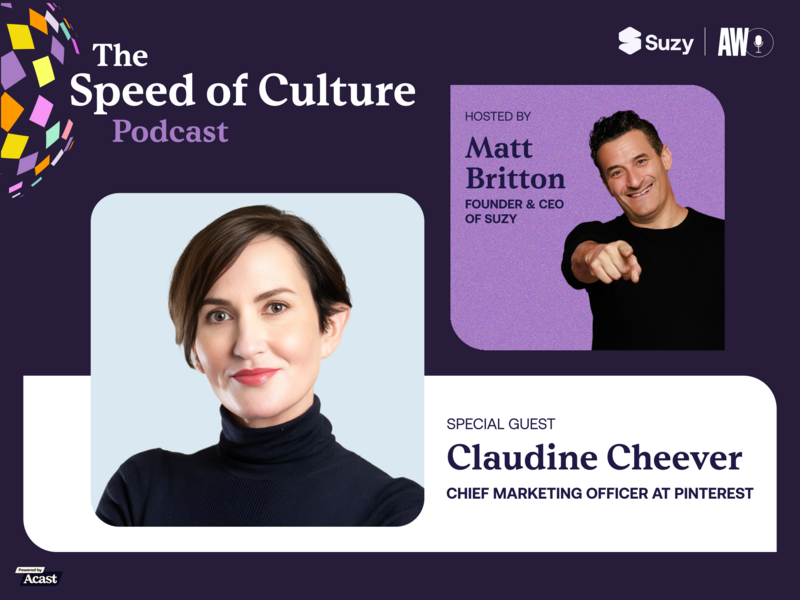
This episode of The Speed of Culture podcast is where Matt Britton welcomes Claudine Cheever, Chief Marketing Officer at Pinterest. Their conversation looks at how the platform is evolving from a destination for major life events to a daily resource for creative inspiration and shopping. Claudine outlines a strategic vision that prioritizes user well-being and the development of personal taste in an increasingly algorithmic world.
From Big C to Little C Creativity
Pinterest has always been a home for inspiration, but its role in the lives of its users is expanding. Claudine details how the platform is increasingly serving as a daily companion for "little C" creativity, including small shopping missions and daily projects. This evolution is particularly visible among Gen Z, who now make up more than half of the Pinterest user base.
By making the journey from inspiration to action easier and more discoverable, Pinterest is helping users move their lives forward in tangible ways every day.
Bringing Back the Joy of Digital Shopping
E-commerce has made the internet an incredible place to buy things, but it has often removed the joy from the process of shopping. Claudine explains that traditional online shopping has become purely transactional, focusing on efficiency over discovery.
Pinterest is looking to reverse this trend by reintroducing a sense of delight and exploration. Because the majority of searches on the platform are unbranded, users have the freedom to discover new products and ideas that align with their personal vision. Building a deeper sense of loyalty and confidence in the brands that users eventually choose to bring into their lives is the intention of the approach.
Prioritizing Intent over Attention
In the modern marketing environment, "attention" is often treated as the primary currency, but Claudine argues that "intention" is the new North Star. The intention economy focuses on users who have a mission in mind and are ready to make deliberate choices.
Pinterest is educating advertisers on the value of reaching consumers in this state of mind, where they are actively curating and deciding rather than passively scrolling. Brands are then able to participate in a more meaningful middle funnel journey, where they can build lasting relationships based on relevance and trust.
The Bold Risk of Phone-Free Experiences
In a move that might seem counterintuitive for a digital brand, Pinterest has embraced the power of offline living. Claudine shares the story of the phone-free Coachella activation, where the brand asked attendees to put their devices away, and fully immerse themselves in the physical experience. This bold decision resulted in a doubling of earned media, and a powerful word-of-mouth movement.
Deep, human experiences rather than digital captures are the building blocks of memory structures that Pinterest wants to build. Pinterest is proving that the most impactful brand moments often happen when the screen is dark.
Cultivating Taste in an Algorithmic World
The rise of social media has often led to the creation of echo chambers, where individuals are pressured to follow the same influencers and trends. Claudine examines how this can lead to a loss of individualism, and a sense of insecurity.
Pinterest serves as a counterpoint to this trend by providing a private space for users to develop their own taste. Whether it is choosing a pair of Adirondack chairs or finding the perfect style of black T-shirt, the platform empowers people to build confidence in their own identity. Because this journey of self-actualization is a vital part of human growth and well-being.
Leadership as Radical Ownership
As Claudine reflects on her career journey through some of the world's most successful organizations, she identifies radical ownership as a core leadership principle. She defines ownership not as a desire for control or credit, but as the accountability to fix a problem when you see it.
Leaders are able to identify gaps, and build things from the ground up with this spirit of initiative, even when the process looks messy. By fostering this mindset within her teams, she is helping Pinterest navigate a rapidly changing market with conviction and tenacity.
Building a Human Future for Discovery
For any leader looking to build a brand with lasting impact, this episode is a gold mine because it talks about how the well-being of the user ultimately leads to the most business gains, even when it seems counterintuitive. Claudine Cheever is not just describing a marketing strategy, but outlining a vision for a more intentional and human digital world.
Key takeaways from the conversation include: the movement from transactional e-commerce to joyful discovery; the importance of the intention economy for building brand loyalty; why digital brands should embrace offline experiences; and how personal taste serves as a foundation for individual identity.