





“Home is a lifestyle.” – Jennifer Wilson
Home no longer changes only when something breaks. It changes as life inside it evolves. Families grow and shift. Pets become part of the household. Work moves in and out of living rooms. People stay longer, invest more thoughtfully, and expect their homes to adapt with them over time. For brands operating at national scale, that shift raises the bar. Relevance now depends on understanding how people actually live, not just what they need to fix.
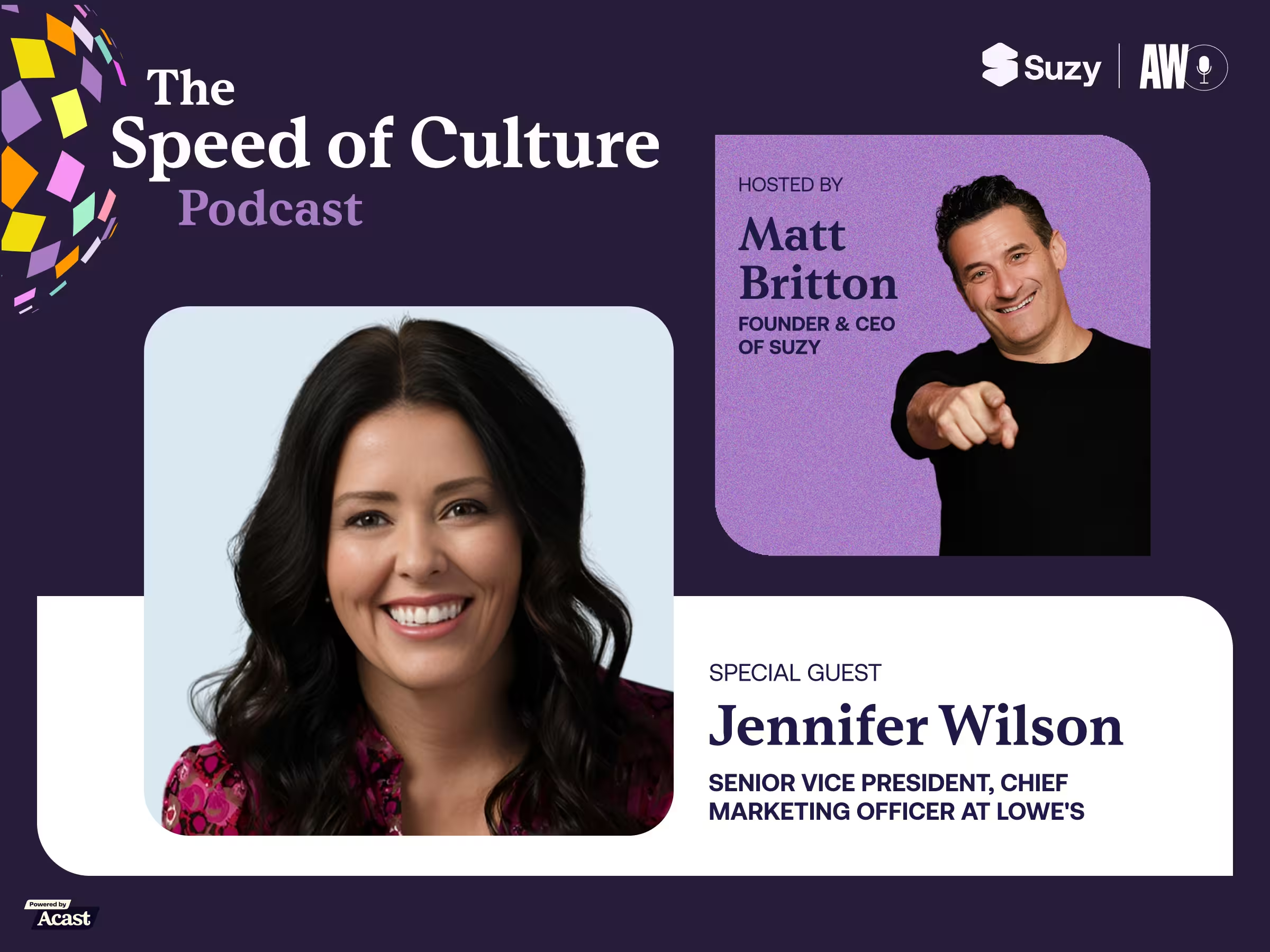
In this episode of The Speed of Culture, Jennifer Wilson, Chief Marketing Officer at Lowe’s, joins Matt Britton to unpack how Lowe’s marketing strategy is responding to that reality. She shares how Lowe’s brand transformation connects culture, technology, and leadership discipline, from rethinking the role of home improvement to investing in AI, creators, loyalty, and the trades. The conversation offers a grounded look at home improvement brand marketing and what it takes to stay relevant as expectations continue to shift.
Tune into the latest episode or read the transcript below to learn more. Here are some top takeaways:
Home Has Become a Lifestyle, Not a Project List
Jennifer explains how the meaning of home has expanded. During the pandemic, home became a place of safety. What followed was something deeper.
People now think about how their homes adapt over time. Who lives there. How children grow. How pets fit into daily routines. How long they plan to stay. Home reflects life stages, not weekend to-do lists.
This shift sits at the heart of Lowe’s marketing strategy. The brand no longer shows up only when something needs fixing. It positions itself as a long-term partner in how people live, grow, and plan ahead.
For leaders focused on home improvement brand marketing, the implication is that relevance comes from understanding lifestyle, not just demand cycles.
Moving Beyond “Sticks and Bricks”
Jennifer addresses a long-standing perception directly. For years, Lowe’s was associated primarily with construction materials and hard projects. That identity still matters, but it no longer tells the full story.
Lowe’s brand transformation includes expanding marketplace offerings, décor, and in-store experiences that invite customers to imagine, not just repair. The goal is to support both structure and self-expression, meeting customers whether they arrive with a problem or a vision.
This approach broadens relevance across customer mindsets and reflects a more complete view of what home improvement means today.
AI as Support, Not Substitution
When Jennifer talks about AI, she does not frame it as a breakthrough headline or a silver bullet. She talks about it as a tool that lowers anxiety, removes hesitation, and helps people take the next step.
In AI in home improvement retail, the real value shows up in small moments. A customer who is unsure where to start. An associate who wants to help but feels intimidated by the breadth of questions they might face. AI steps in to provide guidance, clarity, and confidence, whether that means visualizing a space, understanding what to buy, or answering a practical question on the floor.
At the same time, Jennifer is clear about what AI cannot do. It cannot fix a clogged drain. It cannot wire a home. It cannot replace the skill and judgment that come from experience. That is why AI strategy at Lowe’s runs alongside continued investment in the trades. Technology supports people. It does not stand in for them. And that distinction shapes how Lowe’s thinks about innovation with responsibility.
Two Shopping Behaviors, One Brand Responsibility
Jennifer describes a category shaped by two very different mindsets, often living side by side.
There are customers who enjoy the process of building, fixing, and learning as they go. For them, home improvement is about agency and mastery. Then there are younger consumers who shop through inspiration, impulse, and social discovery. They respond to what feels compelling in the moment, often without a predefined project in mind.
Rather than favor one group, Lowe’s marketing strategy takes responsibility for both. Assortment expands. Storytelling adapts. Experiences shift to meet customers where they already are. This is not about chasing behavior. It is about recognizing reality.
That balance reflects how brands stay culturally relevant over time. Relevance does not come from choosing a side. It comes from understanding how different people move through the same category for different reasons.
Why Staying Put Changes Everything
The current housing market has slowed movement, but Jennifer reframes that pause as a different kind of momentum.
When people stay in their homes longer, they stop thinking in terms of quick fixes. They think about comfort. Longevity. Small upgrades that make everyday life better. Paint refreshes. Appliance replacements. Outdoor spaces that get more use. These decisions feel less transactional and more personal.
For Lowe’s, this shift reinforces the importance of being dependable in everyday moments. Fast delivery. Clear guidance. Products that feel worth investing in. Home improvement brand marketing in this context is not about dramatic transformation. It is about showing up consistently when people decide to improve the space they already know well.
Creators, Community, and Cultural Reach
When Jennifer talks about creators, she does not describe them as a distribution channel. She talks about them as people who bring energy, personality, and real stories into the brand.
Lowe’s Creator Network has grown into the tens of thousands, and its impact shows up beyond metrics. Creator-led moments brought people into stores. They created lines. They sparked generosity. They produced stories people wanted to talk about and share.
This is the heart of creator economy retail brands done well. The goal is not amplification alone. It is participation. When creators help people see themselves inside the brand, reach turns into connection. And connection lasts longer than attention.
Loyalty and Retail Media as a Growth Engine
With more than 38 million members, loyalty marketing in retail gives Lowe’s a deep understanding of how people live in their homes, not just how often they shop.
Jennifer explains how first-party and home data help the brand see patterns: when people upgrade, when they maintain, when they need help, and when they stop engaging. That insight feeds into a retail media network strategy designed to feel useful, not disruptive.
The focus stays on relevance. Offering partners meaningful access to audiences while protecting the customer experience. When data, culture, and context align, loyalty becomes a long-term growth engine rather than a promotional tool.
Leadership That Matches the Moment
Jennifer also reflects on leadership shaped by time inside the organization, not theory.
She talks about taking assignments she did not plan for. Stepping into situations that needed fixing. Moments where titles mattered less than effort, and progress required everyone to show up at the same level. Those experiences shaped a leadership style rooted in accountability, trust, and shared responsibility.
In a business environment where certainty often arrives late, leadership depends on clarity and ownership. For Jennifer, lifting others up and standing fully behind decisions is not an idea. It is the work. And it is how momentum gets built during periods of real change.
What This Means for Brand Leaders
This episode offers more than insight into one retailer’s strategy. It provides a practical lens on modern brand building at scale.
The takeaways are clear:
- Home reflects lifestyle, not just function.
- Technology supports relevance when guided by people.
- Culture rewards brands that understand how life actually works.
- Loyalty and data create value when tied to experience.
- Leadership requires conviction, not comfort.
For leaders navigating home improvement brand marketing, retail marketing strategy, or the broader question of how brands stay culturally relevant, this conversation offers grounded perspective rather than surface-level theory.