



Scaling the Feeling: How CAVA Protects Human Connection as It Grows
Rapid retail expansion usually improves market access, but it can easily dilute customer experience. As store counts increase and operational systems standardize, maintaining the emotional connection that initially built customer loyalty requires intentional strategy.
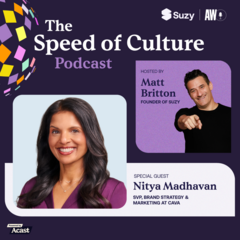
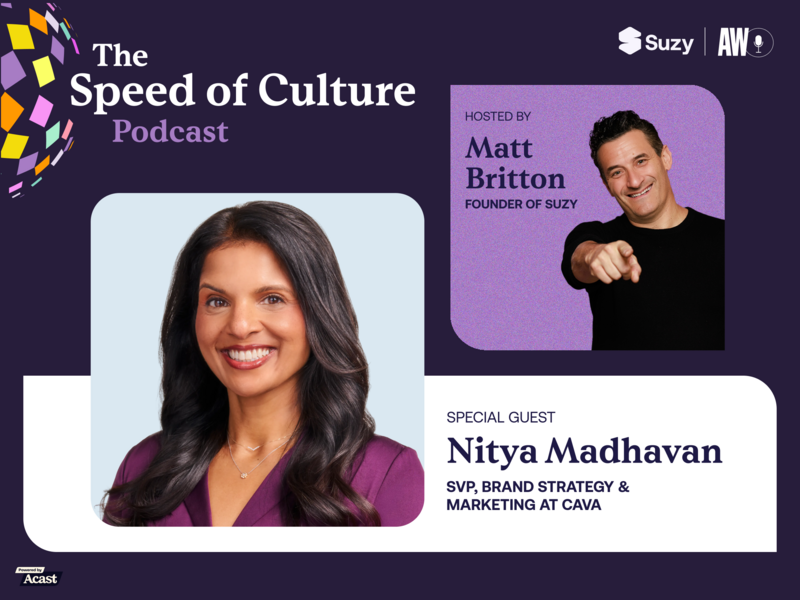
On this episode of The Speed of Culture Podcast, host Matt Britton speaks with Nitya Madhavan, Senior Vice President of Brand Strategy and Marketing at CAVA, about managing brand growth under aggressive expansion targets.
As CAVA scales from nearly 500 store locations toward its target of 1,000 locations by 2032, Nitya focuses on a critical operational objective: maintaining consistent brand sentiment across every store opening.
Hospitality as an Operational Differentiator
CAVA structures its market positioning around Mediterranean hospitality: generosity, abundance, and personalized engagement.
This positioning gives CAVA a broader market identity than standard food sourcing or customization options alone. While Mediterranean menu options support diverse dietary preferences, the core value proposition centers on offering a healthy, flavor-forward dining experience that feels welcoming.
For enterprise marketing leaders, this approach highlights a clear distinction:
- Product attributes drive initial trial
- Consistent emotional experiences build long-term retention
As CAVA expands into new geographical markets, the primary objective goes beyond logistical execution. The business must deliver consistent hospitality across a growing store network and a broader employee base.
Scaling In-Store Sentiment
Maintaining consistent store culture requires deliberate design and operational alignment. CAVA plans its store formats to accommodate diverse customer visits, supporting quick lunch orders alongside relaxed sit-down meals.
This dynamic presents a key challenge during rapid retail expansion:
- Standard operating procedures drive repeatability.
- Genuine hospitality relies on authentic human interactions.
Marketing leadership must build clear guardrails so teams can deliver high quality without relying on rigid scripts.
Shifting From Top-of-Funnel Media to Consumer Participation
CAVA applies this hospitality framework across digital channels and field activations.
During the Mediterranean Summer Supper Series, CAVA hosted targeted community dinners across major metropolitan markets like Los Angeles, New York, and San Francisco (which was actually selected as the final location by fan vote).
CAVA applies this same participation model across digital platforms:
- Interactive activations create user-generated content opportunities.
- Active community monitoring connects consumer feedback directly to operational choices.
- When fans advocated for the return of white sweet potatoes, one of CAVA’s founders, Ted Xenohristos, joined a live community video call to announce the menu update directly.
By giving customers a direct role in brand decisions, CAVA turns simple transactions into long-term engagement.
The Strategic Shift Toward Micro-Communities
Nitya’s previous experience at Meta shapes her perspective on evolving consumer media consumption.
She highlights a clear migration away from public broadcast feeds toward focused digital micro-communities organized around shared interests.
This trend reflects changing user habits on crowded social platforms. While broad reach remains valuable for top-of-funnel exposure, consumers are increasingly seeking smaller spaces with higher relevance and lower noise.
For brand marketers, this trend requires a change in channel strategy:
- Broad advertising builds generic visibility.
- Micro-community engagement builds active brand advocacy.
AI Strategy: Internal Velocity vs. Front-of-House Integrity
CAVA integrates AI technology selectively across its operations.
The company uses AI tools to improve team productivity, speed up internal workflows, and evaluate customer data trends. These applications help teams operate faster and surface useful consumer insights.
However, CAVA maintains strict guidelines regarding customer-facing content.
For instance, CAVA avoids using AI-generated food imagery in its marketing materials. Because the brand centers its value proposition on real ingredients, management prioritizes authentic food photography to preserve customer trust.
Her evaluation framework for new technology implementation remains clear: AI must expand operational productivity without eroding customer trust.
This operational line applies across industries. The central decision point is not whether a tool can generate content quickly, but whether its use impacts brand credibility.
Modernizing First-Party Data Into Relationship Architecture
First-party data provides a solid foundation for personalizing customer interactions at scale.
CAVA updated its loyalty architecture around a multi-tiered framework designed to recognize guest habits, track dining preferences, and measure engagement frequency.
However, CAVA avoids using data solely for short-term transactional promotions. Instead, management leverages customer insights to refine menu offerings, deliver early product access, and tailor local experiences.
This dynamic became clear during the San Francisco pop-up campaign, where local users actively engaged with the CAVA app before a permanent restaurant was open in their city. The digital touchpoint established an early relationship prior to physical retail availability.
Brand Leadership as Stewardship
Nitya closes the conversation by framing brand management through the lens of long-term stewardship, citing a principle from Kobe Bryant: "Leave the game better than you found it."
Brand leaders guide established assets through specific growth phases. Their core responsibility is to preserve foundational brand equity while adapting strategy to match changing market environments.
Effective stewardship requires identifying which core values must remain unchanged, which operational systems must evolve, and how to position the business for sustainable long-term performance.
As CAVA continues its expansion, maintaining this balance remains a strategic priority. Market dynamics, channel strategies, and technologies will continue to evolve, but the core business objective stays the same: delivering consistent, high-quality hospitality across every customer interaction.