

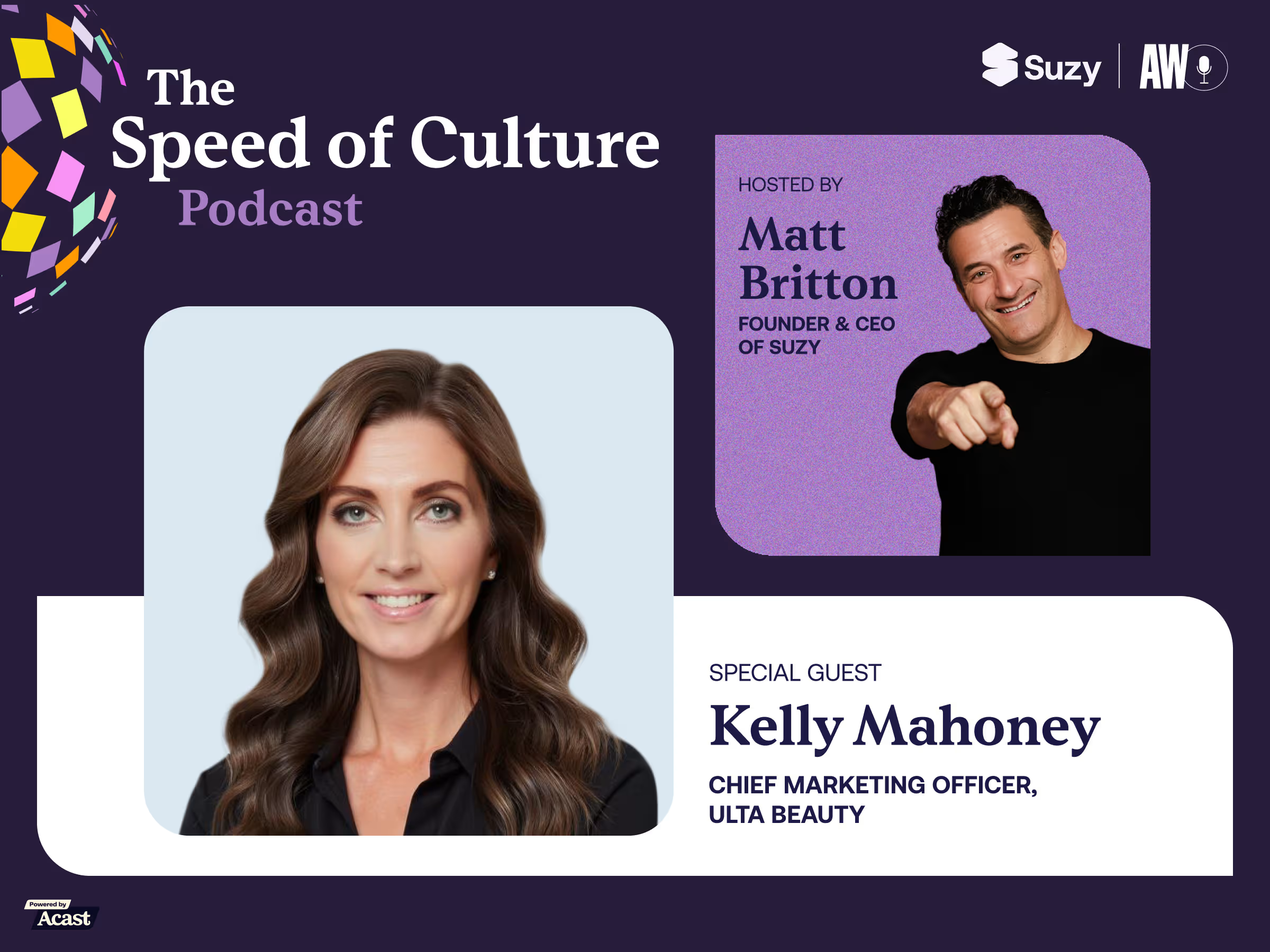

"A consumer really starts to fall in love when they say, 'Hey – you know me. You understand my needs.'" – Kelly Mahoney
Growth today depends less on reach and more on relevance. As customer expectations rise, the challenge brands now face is how to scale personalization without losing trust or emotional connection.
That challenge sits at the center of this episode of The Speed of Culture podcast, where Matt Britton speaks with Kelly Mahoney, Chief Marketing Officer at Ulta Beauty, live from CES 2026. The conversation moves beyond surface-level trends into how Ulta Beauty uses loyalty, data, and intent to build relationships that feel personal, consistent, and human across millions of guests.
Tune into the latest episode or read the transcript below to learn more. Here are some top takeaways:
Loyalty as the Operating System
Ulta Beauty’s scale stands out, but Kelly makes it clear that scale alone explains very little. What matters is how the Ulta Beauty Rewards loyalty program and personalization engine function day to day.
With more than 64 million members driving approximately 95% of sales, loyalty acts as a living feedback loop. Every interaction helps Ulta Beauty understand behavior, preferences, and intent more clearly. That insight shapes discovery, replenishment, and long-term engagement, turning loyalty into the backbone of the business rather than a marketing add-on.
Kelly explains how first-party data supports smarter decisions across marketing, merchandising, and operations. This foundation anchors the Ulta Beauty personalization strategy 2026 in execution, not theory.
From Demographics to Motivation
One of the clearest shifts discussed in the episode is Ulta Beauty’s move away from traditional demographic targeting based on age and gender.
Kelly describes how the brand now prioritizes motivation-based marketing segmentation, focusing on why guests shop, how they discover products, and what drives replenishment over time. These behavioral signals offer a clearer picture of intent than static demographics ever could.
This approach allows Ulta Beauty to anticipate needs and respond with relevance across the Ulta Beauty omnichannel customer journey, spanning social discovery, digital consideration, and in-store experience without forcing guests to start over at each step.
Beauty, Wellness, and Cultural Relevance
Kelly does not talk in trends or category shifts. She talks in lived behavior. What she describes is a change she watched happen in real time, especially during the years when routines broke and people spent more time at home with themselves.
Kelly explains that beauty did not disappear during that period. It changed shape. Guests still wanted to express who they were, but they did it differently. Skincare, haircare, and daily rituals took center stage. What once felt like “maintenance” started to feel like care. Over time, that behavior reshaped how people define beauty itself.
This is where Ulta Beauty’s beauty and wellness retail strategy comes into focus. Wellness is not treated as a bolt-on category or a short-term expansion. It becomes a way of understanding how guests care for themselves across seasons of life. By grounding wellness in credibility and trust, Ulta Beauty earns the right to show up in moments that feel personal, not performative. The result reaches beyond the product. It connects to confidence, self-expression, and the everyday choices people make about how they want to feel.
AI as an Enabler, Not the Headline
Kelly does not frame AI as a breakthrough moment or a creative shortcut. She frames it as infrastructure. Something that works quietly in the background to help teams do their jobs better and guests feel more understood.
She posits that AI-powered personalization in beauty and wellness retail shows up as a practical tool for relevance. Structured data allows Ulta Beauty to recognize patterns, anticipate needs, and respond with timing that feels natural rather than intrusive. Platforms like Adobe CDP retail marketing strategy bring customer signals into one place, while Adobe Firefly creative automation helps teams create at the speed modern marketing demands.
What stands out is where Kelly keeps the emphasis. Technology supports people. It does not replace judgment, curiosity, or care. AI helps remove friction so teams can focus on meaning, intention, and experience. Used this way, it becomes less about efficiency and more about clarity, allowing Ulta Beauty to move faster without losing the human thread that holds the brand together.
What This Means for Leaders and Builders
This episode offers more than a CES recap. It reflects how large brands can grow with discipline while protecting the emotional connection that keeps customers coming back. Kelly’s perspective brings the conversation out of theory and into real operating choices leaders face every day.
Key takeaways include:
- Loyalty compounds when relevance builds over time
- Motivation-based signals outperform static segments
- Personalization depends on trust as much as data
- AI works best when paired with human judgment
For marketers, retail leaders, and teams navigating growth at scale, this conversation offers clarity without exaggeration.