


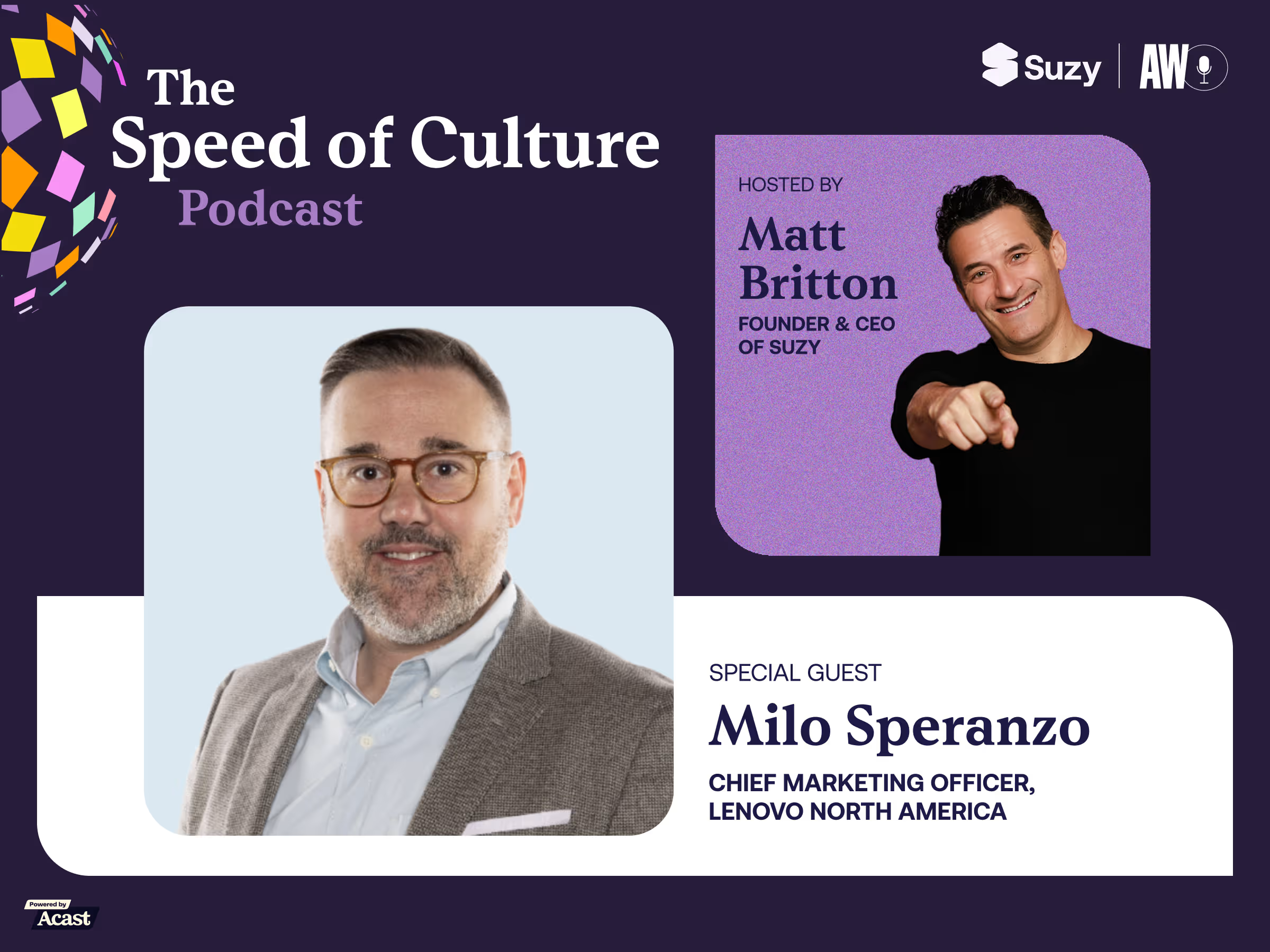

“One of those non-negotiables is certainly privacy.” – Milo Speranzo
Technology evolves fast. Trust evolves slower. That gap defines much of the tension surrounding AI today. As capability expands, expectations around responsibility, permission, and control rise alongside it.
That tension sits at the center of this episode of The Speed of Culture podcast, where Matt Britton speaks with Milo Speranzo, Chief Marketing Officer for Lenovo North America, live from CES 2026 in Las Vegas. The conversation moves beyond product announcements into how Lenovo thinks about AI at scale, why integration matters, and what signals the next major shift in computing.
Tune into the latest episode or read the transcript below to learn more. Here are some top takeaways:
The Sphere Was a Statement, Not a Spectacle
Lenovo’s decision to host their Tech World, a sold-out event at the Sphere, during CES was not about scale for its own sake. It followed a strategic shift already underway inside the business, shaped by how customers engaged with Lenovo’s presence at CES the year before.
Milo explains that the previous year’s pivot toward commercial and B2B audiences revealed something important; small and medium businesses, alongside large enterprise accounts, wanted a clearer view of what AI meant for their operations. They were less interested in isolated devices and more focused on how technology fits cohesively together.
Lenovo’s Tech World at CES became a way to tell that story in full. It signaled that Lenovo’s presence at CES 2026 was about alignment and scale, not a single product moment. This framing set the stage for the broader Lenovo AI strategy unveiled at the Sphere.
An End-to-End Lenovo AI Ecosystem
At the heart of the conversation sits integration as a practical advantage, not a marketing concept.
Milo points out that few companies operate across phones, wearables, PCs, servers, and storage within one portfolio. Lenovo does. That breadth enables a connected Lenovo AI ecosystem designed to work across environments rather than within silos, especially as AI moves into daily workflows.
This ecosystem approach shows up in several areas discussed during the episode, from enterprise infrastructure to emerging concepts in wearables and personal AI agents. Instead of treating AI as a layer added onto devices, Lenovo approaches it as an orchestrated system that spans environments and use cases.
The goal is coherence. Tools that understand one another. Experiences that carry forward rather than reset from device to device.
Privacy Becomes a Non-Negotiable
As the conversation turns to adoption, one theme comes forward clearly: Privacy now functions as a requirement, not a preference.
Milo describes how edge computing AI privacy shapes Lenovo’s approach. Running AI at the edge, directly on the PC, allows users to retain control even without constant connectivity. This model addresses both performance and trust, particularly in environments where cloud reliance introduces friction or risk.
Rather than framing privacy as a limitation, Lenovo treats it as an enabler. Permission-based design allows customers to decide how much data they share and when. This mindset anchors Lenovo edge AI and privacy as a core differentiator rather than an afterthought.
The AI PC Refresh Cycle Takes Shape
The discussion places today’s moment in a broader market context shaped by timing as much as technology.
Devices purchased during the pandemic now age out of relevance as AI workloads grow more demanding. Milo sees this shift fueling the AI PC refresh cycle, led first by users with intensive technical needs. Engineers, architects, designers, and advanced creators move early, driven by workflows that require local inference, faster processing, and more capable systems.
In this view, the AI PC becomes the anchor of the next upgrade wave. Lenovo positions itself at the center of that transition by aligning hardware, software, and infrastructure into a unified approach that supports performance, resilience, and real-world use.
Leadership in Fast-Moving Systems
Beyond technology, the episode offers insight into leadership under pressure.
Milo reflects on his path from the military into marketing leadership and the importance of learning through iteration. Progress rarely follows a straight line. Setbacks happen. The ability to move forward without carrying every misstep defines momentum.
This leadership lens ties back to Lenovo’s broader strategy. Building at scale requires patience, trust, and the willingness to refine continuously. The same mindset that shapes culture inside organizations also shapes how products evolve in market.
What This Means for Leaders and Builders
This episode offers more than a CES recap. It provides a grounded perspective on how large organizations navigate AI responsibly while staying competitive.
Key takeaways include:
- Integration creates an advantage when systems work together.
- Edge computing AI privacy shapes trust and adoption.
- The AI PC refresh cycle reflects changing expectations, not short-term hype.
- Leadership depends on iteration, clarity, and permission-based thinking.
- A cohesive Lenovo AI ecosystem allows strategy to translate into execution.
For leaders navigating AI adoption, infrastructure decisions, or organizational change, this conversation offers clarity without exaggeration.