


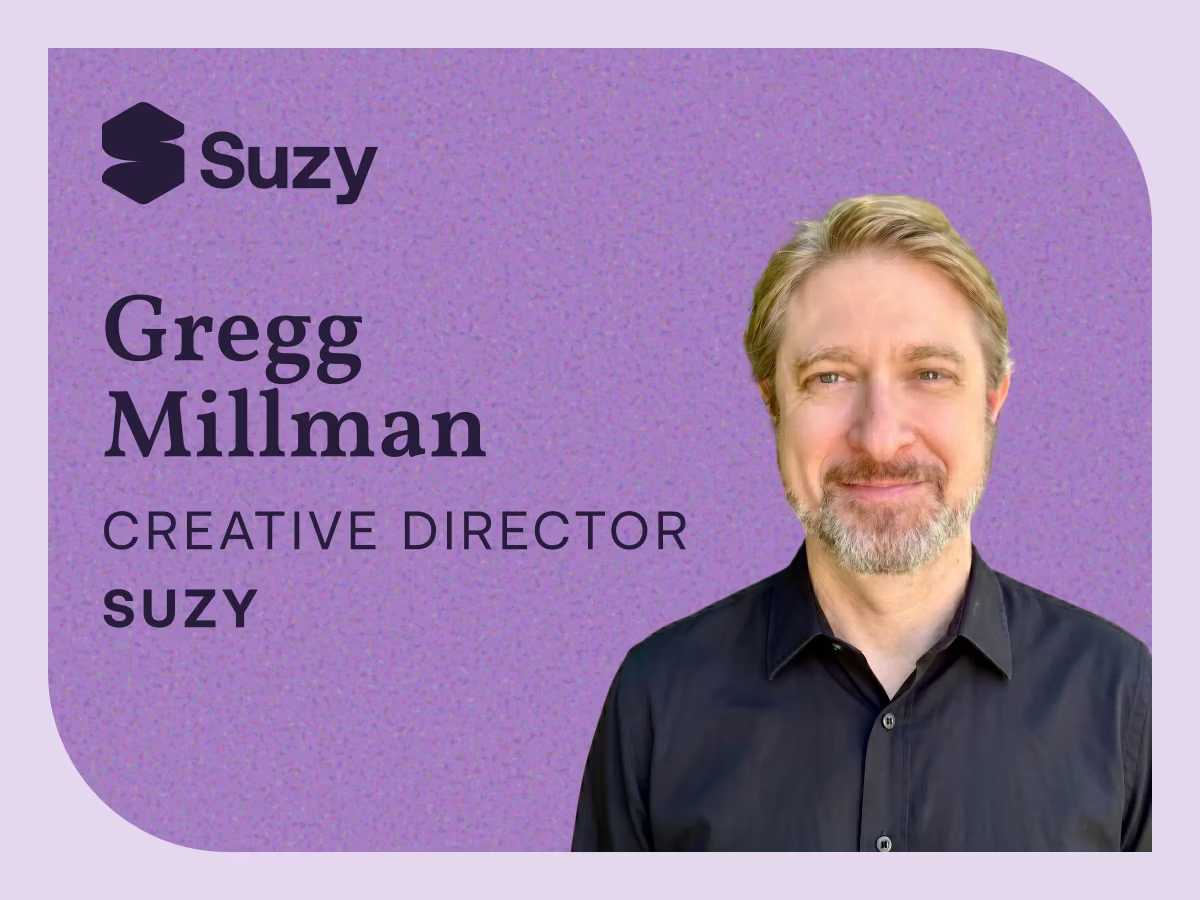

By Gregg Millman, Creative Director, Suzy
I spent the first part of my advertising career in agencies. I remember spending four months on a TV spot – strategy, casting, three days of production, then post-production. Looked great. We presented it to the client. Then it aired. Then we waited.
Six weeks later, the client shared some brand tracker data. Awareness was up. Maybe the spot did it, maybe it was some of the other channels. Nobody really knew. We called it a win and moved on to the next brief. That was the Big Reveal era. Make the thing, release it, and wait.
Then social media showed up and blew the whole thing wide open. Real-time comments, instant engagement data, share counts updating by the minute. For a creative director, it was like going from a paper map to GPS. You could see everything. You could course-correct in real time. Eventually, you could test three versions of an idea before lunch and know which one won by dinner.
For a while, it even felt like a superpower. Then we realized the instrument was tuned to the wrong frequency. We were getting signal – plenty of it – just not necessarily from the right sources. We’d traded the slow confidence of the Big Reveal for the anxious dopamine loop of the like counter. So we started optimizing for noise instead of resonance. We let the loudest voices in the comment section run the show.
This is the story of how I stopped letting that happen – and what I learned about finding the signal inside the chaos.
Testing: when "fast feedback" becomes a ghost audience
One of social's greatest gifts to the creative process is speed. The ability to put multiple versions of a hook in front of the world and quickly know which one won – that's genuinely remarkable. For years, testing was the enemy of creative momentum. It was slow, expensive, and often felt like it was designed to sand the edges off your boldest ideas. Social changed that calculus.
But when you test on social, you aren't testing against your target audience. You're testing against an algorithm designed to maximize engagement, not brand equity. A video might spike because the music is trending. A post might go wide because a bot farm in another hemisphere picked it up. A caption might land because it accidentally triggered a culture war in the comments.
As a result, brands end up wrestling with a Ghost Audience – a mass of engagement data that tells you exactly what happened but nothing about who it happened to or why. Was that spike in reach driven by your high-value buyers? Or by people who will never touch your product?
Benchmark data from 2025 shows engagement rates declining year-over-year across major platforms – Facebook down roughly 36%, TikTok down around 34% – even as brands pour more budget into social content. Volume is up. Meaning is down.
The fix isn't to abandon social testing. It's to stop treating it as the primary signal. Social is still a useful directional spark – it can be a first scan of what's resonating in the cultural atmosphere. But the real test happens when you connect directly with your actual consumers.
That's where verified consumer intelligence comes in. Instead of optimizing for whatever the algorithm surfaced that afternoon, you can pressure-test a creative direction against the people who actually matter – and know what's shifting in the market before it shows up in your comment section.
Conversation: the comment section circus
Social media ended the brand monologue. For decades, we spoke and consumers listened. Social made that a two-way street – and the best brands learned to use it brilliantly. Real-time engagement with fans, reacting to culture as it unfolds, building a persona that actually feels human. The intimacy it creates is something traditional advertising spent billions trying to approximate.
The problem is the comment section.
The loudest voices on social are almost never the most representative. You're dealing with trolls, bots, and the vocal 1% – a tiny fraction of users who generate the vast majority of digital noise. When brands try to listen to social, they often end up pivoting based on the complaints of ten people while unintentionally ignoring the quiet satisfaction of ten thousand. Creative briefs get rewritten because of three replies on X. Brand guidelines can bend because an influencer with 40,000 followers had a bad take on a color palette.
This is what I call defensive creativity – where fear of social sands down your best ideas until they're so safe they're invisible. It's like designing a chair by committee and ending up with something no one can sit in.
The 2025 Sprout Social Index found that 73% of social users will buy from a competitor if a brand doesn't respond on social – which means the pressure to engage is real and legitimate. But there's a difference between responsiveness and capitulation. Structured dialogue with your actual audience – not the comment section – is how you stay connected without losing your creative nerve.
The fix is structured dialogue with your actual consumers – not the comment section. When you can hear the nuance and the 'why' behind a reaction, in their own words, you stop mistaking volume for truth. That's a fundamentally different input than whatever happened to spike on the platform that afternoon.
Collaboration: co-creation with a safety net
The age of the Prosumer – the consumer who also wants to be a producer – is real. Consumers don't just want to buy from brands they love. They want to help build them. UGC campaigns, flavor votes, community naming contests – the walls between the creative department and the customer have genuinely come down, and the emotional investment that creates is extraordinary. When someone feels like they helped shape a product, they become an evangelist.
Open collaboration, though, is a double-edged sword. In 2016, the UK's Natural Environment Research Council asked the public to name a new polar research vessel. Nobody hacked the poll. Nobody organized a revolt. Regular people, in good spirits, just thought "Boaty McBoatface" was funny – and voted accordingly. The council got exactly what open collaboration promised: authentic public participation. They just didn't get what they wanted. The ship was quietly renamed the RRS Sir David Attenborough – though in a move of bureaucratic genius, they did give the "Boaty McBoatface" name to a small onboard submarine, presumably to appease the internet.
It didn't work. Newspaper editorials decried the lack of democracy. Social media erupted. Someone even started a petition demanding Sir David Attenborough legally change his own name to Boaty McBoatface. The lesson wasn't that the internet is malicious. It's that when you open the doors without guardrails, you get the crowd's sense of humor, not your brand's sensibility.
Beyond the memes, there's a quieter danger: design by committee. When you try to please everyone who votes on a poll, you end up with a product that stands for nothing. Creative direction exists for a reason. Instinct and taste are not obstacles to collaboration – they're what makes collaboration worth having.
The key is collaboration on your terms. There are a few ways that can work in practice. You can use Suzy to pressure-test privately before you open anything up publicly – so the collaboration is designed to land where you need it to. You can run a public campaign without revealing results in real time, reconciling what the crowd said against what your verified consumers actually think before you commit to anything.
However you structure it, the principle is the same: you never have to be at the mercy of the crowd. Keep a real-time eye on what consumers are actually responding to in the market. Connect directly with a curated group of representative consumers. Tell the difference between a suggestion that holds up and one that's just loud. The final product is better because real consumers shaped it. And you stayed in control of where it went.
Validation: turning vibes into defensible evidence
Here's the dynamic every creative leader knows: we’re increasingly expected to defend our instincts with data, but the data social gives us is often the wrong kind. Likes aren't sales. Views aren't brand equity. A video with five million impressions that nobody attributes to your brand is not a success – it's an expensive irrelevance.
The 2025 Sprout Social Index found that 65% of marketing leaders say they need to prove how social supports business goals just to get leadership buy-in – and yet most of what social natively reports isn’t necessarily what leadership cares about.
This is the Like Trap. And I fell into it hard in my agency years. We'd present a reel with outstanding engagement numbers, the CMO would smile, and then three months later someone would ask where the sales lift was. Silence. The data we'd been optimizing for wasn't connected to anything the business actually measured.
Now, when you walk into a meeting, you don’t have to lead with engagement rates. You can lead with what actually moved: brand favorability, purchase intent, perceived innovation among our core demographic. The narrative your CMO needs. The brief your brand manager needs. The evidence your finance team needs to say yes – without rebuilding the deck every time the audience changes. That's how bold creative stops getting killed in boardrooms and starts shaping culture.
Finding your North Star again
I still incessantly scroll through comment sections. Old habits. But I don't treat them as gospel anymore.
Social media is the best early warning system ever built – as long as you know what it can and can't tell you. It can tell you what the internet noticed. It cannot tell you what your buyer felt, or why they felt it. It can show you what trended. It cannot show you what built trust. The chaos of social media isn't the enemy of great creative work. Mistaking the chaos for signal is.
When you can pair the raw energy of social – the speed, the culture pulse, the unfiltered reaction – with the precision of verified consumer intelligence, you get something we never had back in those days of waiting six weeks for brand tracker data: the right signal, from the right source, fast enough to actually use it.
That's how you reclaim your North Star. Not by silencing the chaos – but by tuning the instrument to the right frequency.
What must creative directors do to turn social media's chaos into a strategic advantage?
Social media gave creative directors speed and cultural access – but it tuned the instrument to the wrong frequency. You're getting signal, just not from the right source. The CDs who thrive are the ones who use social as a directional starting point and verified consumer intelligence as the filter – replacing ghost metrics and vocal minority noise with data from the people who actually matter.
- Social data tells you what the algorithm rewarded. Verified consumer intelligence tells you what your actual buyer felt. You need the latter to make decisions that hold up in a boardroom.
- Defensive creativity – sanding down ideas based on the loudest voices in the comment section – is the biggest threat to brand distinctiveness right now.
- Public collaboration doesn't have to mean losing control. Test privately first, or run the public campaign without revealing results in real time. Either way, you never have to be at the mercy of the crowd.
- Boardroom-ready data isn't engagement rate – it's brand favorability lift, purchase intent movement, and perception shifts among your actual target.
Suzy gives creative departments the relevant consumer intelligence to back bold ideas with real evidence – so the best work stops getting killed in the boardroom and starts shaping culture. Learn more about Suzy’s new Decision Engine platform.