




"If you lead with craft, respect the consumer, and honor the moment, people will definitely choose you." — Roberto Ramirez Laverde
The tequila category has had one of the most dramatic decades of any segment in consumer goods. More than 700 new brands entered since 2019. Celebrity investors lined up. Marketing budgets scaled. And through all of it, Patrón held its position by doing something that sounds almost too simple: refusing to change what actually makes it good.
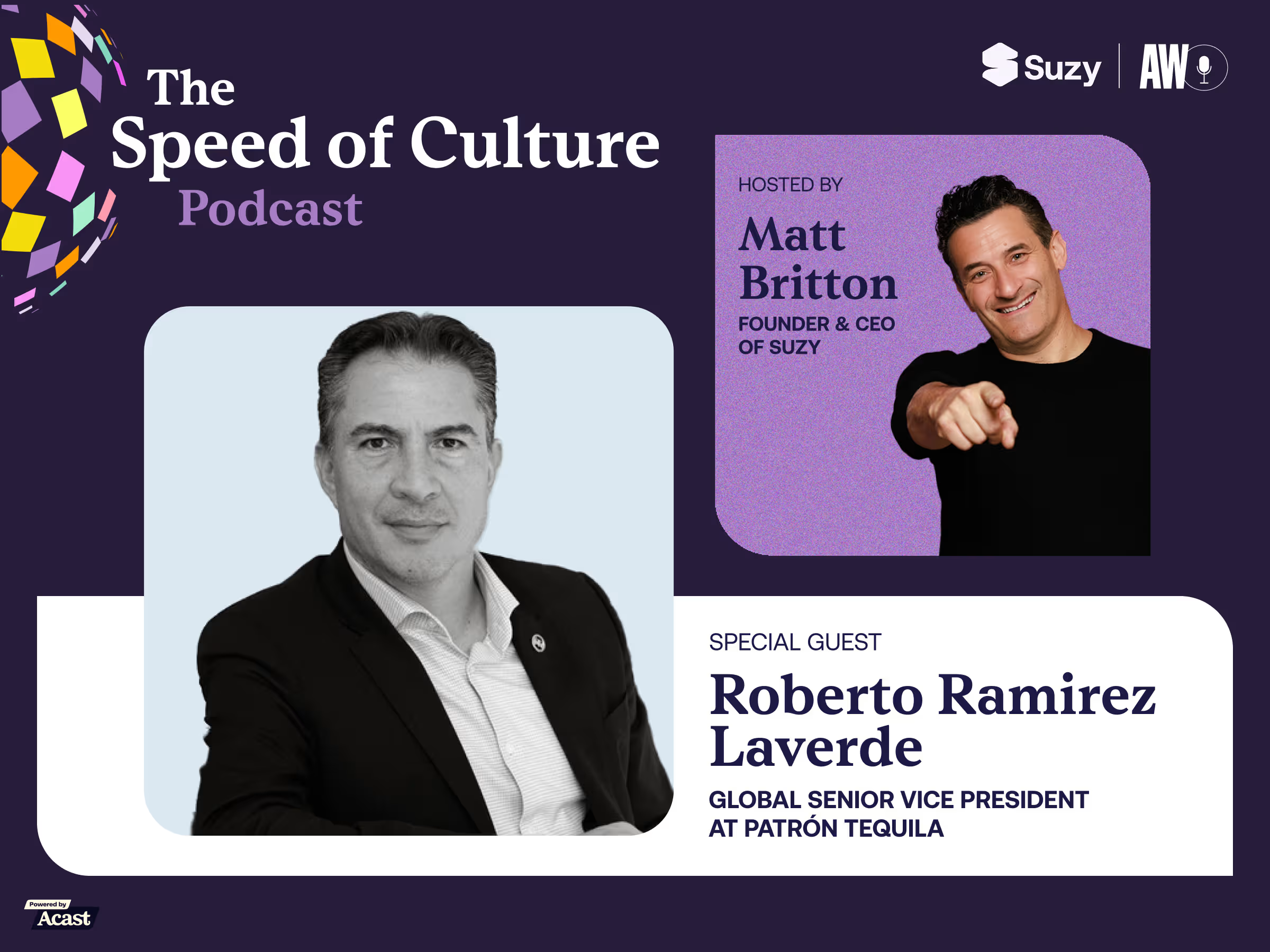
In this episode of The Speed of Culture podcast, Matt Britton sits down with Roberto Ramirez Laverde, Global Senior Vice President of Patrón Tequila at Bacardi, to unpack what that actually means in practice. Tune in to the latest episode or read the transcript below to learn more. Here are the top takeaways:
Protecting What Got You Here
Roberto's approach to brand stewardship starts with a clear-eyed view of what Patrón is protecting. The brand helped define the super premium tequila category, and that history carries responsibility. Everything the team does, from the products it makes to the partners it chooses and the experiences it creates, flows from one standard: uncompromising quality, authenticity, and a commitment to process.
That is not a defensive posture. It is a competitive one. In a market where new entrants are competing for attention and credibility, a brand that has held its standards for decades has a compounding advantage. Roberto frames it as earning a place in culture without lowering the bar to get there.
Transparency as a Brand Foundation
One of the most distinctive moves in Patrón's recent marketing is the additive-free campaign, which tells consumers plainly what is in the bottle: agave, water, and yeast. In a category where many brands are not nearly as forthcoming about ingredients and production, this kind of transparency carries weight.
Roberto does not talk about this as a tactic designed to win against competitors. He talks about it as a natural expression of how Patrón has always operated. The brand has championed transparency for years. The campaign simply made that visible to consumers in a direct way. And in a moment when trust has become the most valuable currency a brand can hold, that foundation matters.
The Guillermo del Toro Partnership and What It Reveals
The Perfect Pour campaign is interesting not just for what it is, but for what it says about how Patrón chooses collaborators. Guillermo del Toro did not come into the picture because of his fame or his reach. He came in because his way of working reflects Patrón's own values. He builds real sets. He uses real light. He refuses to take shortcuts even when easier options exist.
Roberto is direct about this: the reason the partnership works is that del Toro shares the same refusal to compromise on the process. That alignment is what makes a collaboration feel genuine rather than transactional. For marketers thinking about how to approach partnerships, the Patrón model is a useful reference point. Shared values before shared audiences.
Gen Z and the Shift to Intentional Drinking
Roberto sees something genuinely interesting happening with younger consumers in the spirits category. They are drinking less, but they are doing it with far more intention and curiosity. They want to know what is in the bottle, where it came from, who made it, and what the brand stands for. The story behind the product matters to them in a way it did not for prior generations.
This shift plays directly into Patrón's strengths. A brand built on craft, transparency, and quality is well positioned when the consumer asking questions is more sophisticated than ever. Roberto describes these consumers as open to discovery but highly selective, and willing to pay more for something that feels genuinely worth it. That is a different kind of consumer challenge than volume growth. It is one that rewards the brands that actually made something worth choosing.
Music, the Grammys, and How Culture Partnerships Should Work
Patrón's cultural presence is anchored in music, and Roberto's explanation of why is worth noting. The brand has been connected to music for decades. That history means partnerships in this space feel like a natural continuation rather than a calculated move to reach a demographic.
The Grammy partnership is the clearest recent expression of this. Roberto describes it as a reflection of Patrón's long-standing commitment to craftsmanship and creative excellence, which maps onto what the Grammys represent at their best. The same logic applies to artist partnerships: Becky G's 200% identity as both Mexican and American aligns with the cultural roots at the heart of the brand, while Karan Aujla helped bring Patrón el Alto into markets like India and Middle East and Africa. Every partnership goes through the same filter: does this person or institution actually share what we stand for?
Human Connection as a Strategic Priority
Roberto is thoughtful about AI and technology without being dismissive or breathless about either. He welcomes them as tools that can improve efficiency and open new creative routes. But he keeps returning to experience as the thing that actually moves people.
More than 70% of Patrón's consumers, he notes, would choose an experience over a product or gift. That data point shapes how the brand activates at live events, where Patrón creates spaces inside festivals like Lollapalooza that invite people in rather than broadcasting at them. The goal is participation, not observation. And in a world where technology is getting better at broadcasting, the brands that create genuine moments of human connection will be harder to replicate.
What This Means for Marketers and Brand Leaders
Roberto's perspective is grounded in a kind of discipline that is easy to describe and hard to maintain: the willingness to hold a standard even when the market around you is moving fast and the temptation to chase is real. His career advice mirrors his brand philosophy. Build credibility in what you actually know how to do. Learn how the business works. Invest in relationships that matter. And stay willing to stretch into situations you are not fully ready for.
For anyone thinking about how to build and protect a brand across a long cycle, this conversation is worth the time.