



Leading with a Decision Engine in an Era of Infinite Signals
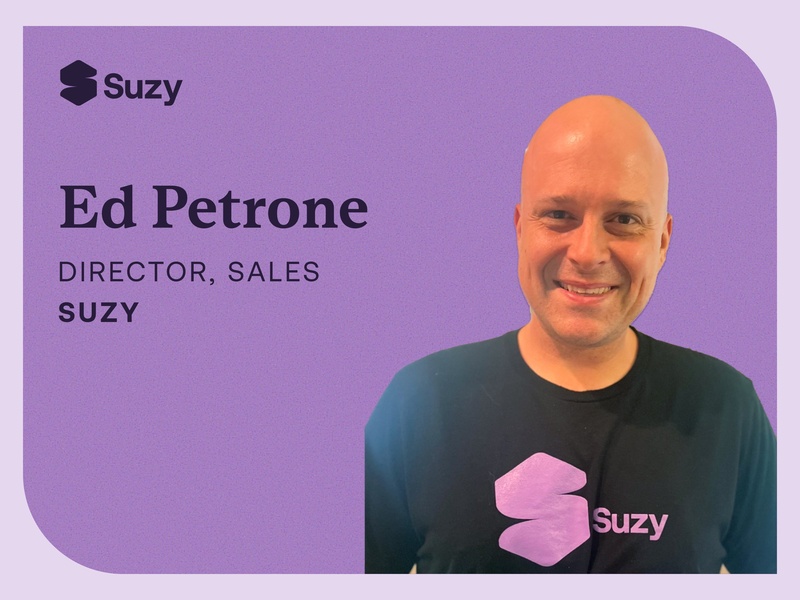
By Ed Petrone, Director of Sales at Suzy
The Pitch You’ve Been Waiting For
You’re standing in the third-base coach's box. The sun is hitting the infield dirt, the humidity is rising, and your lead-off hitter is at the plate. The count is 3-1.
In baseball and softball, the 3-1 count is the holy grail. It’s the moment of ultimate leverage. The pitcher is forced to throw a strike to avoid the walk, and the hitter knows exactly what’s coming. But here’s the thing: having the advantage doesn’t mean anything if you don’t have the conviction to swing. If the hitter hesitates, that pitch whistles right past them for a called strike two. Now they’re defensive. Now they’re in a hole.
I spend my nights and weekends volunteering as a youth baseball and softball coach, and my weekdays as a part of the sales organization at Suzy. The more time I spend in both worlds, the more I realize they are exactly the same. Live your life like you’re at bat and it’s a 3-1 count.
Last Saturday, I watched one of my players look back at me after every single pitch. They weren't looking for a sign; they were looking for permission. They were paralyzed by the "what-ifs." They had the data (the count), they had the skill (the swing), but they lacked the decision.
In the corporate world, we do the exact same thing. We stand in the batter's box, drowning in data points, market trends, and organizational noise, and we look back at the dugout, waiting for someone to tell us it’s okay to swing.
Why does this matter so much? Because those of us in the workforce are all humans, with feelings and needs. We face intense daily pressures, competing priorities, and constant decision fatigue. We want to be successful not just to hit a quota, but because we care about the work we do and the people we do it with. We want to know that when we step up to the plate to make a high-stakes call, we have a clear green light.
The Signal Overload: Why "Insights" Aren't Enough Anymore
For the last decade, businesses have been obsessed with collecting insights. We wanted more data, more dashboards, more visibility. We got it. And now we are suffocating under it.
The problem is no longer a lack of information. The problem is a massive integration gap. Teams are drowning in disconnected data streams. It’s the corporate equivalent of a catcher trying to catch five balls thrown at once. You might snag one, but the rest are going to hit you right in the chest.
The era of using a basic insight platform to look backward is over. To move fast, teams require a modern decision engine.
A decision engine does not just hand you a spreadsheet or tell you that your audience is shifting. It acts as a command center that consolidates market context, emerging competitor trends, your own internal knowledge, and real consumer feedback into one place.
When I’m coaching, I don’t tell a ten-year-old the physics of pitch velocity. If the pitcher is falling behind, I look at my hitter and give them a clear, actionable directive: "He's struggling to find the zone. She’s going to throw a heater down the middle. Be ready." That is a decision. That is what a decision engine does for an enterprise. It takes the noise of the market and translates it into a clean throw.
High Stakes and the Cost of Hesitation
In youth sports, a mistake costs you a run. In business, the stakes are measured in multi-million dollar investments, brand equity, and market share.
When you are responsible for a major initiative—shaping corporate strategy, pushing into a new category, or launching a massive marketing campaign—you cannot afford to guess. You need to pressure-test your ideas with real humans against reality before you step onto the field.
Most organizations stall because their knowledge is fractured. The creative team has a qualitative gut feeling, the strategy team has an old competitor report, and the sales team has daily customer complaints. None of these sources talk to each other. They operate out of completely different playbooks.
When leadership hesitates on a 3-1 count, the window closes. A competitor moves faster, a trend shifts, or the market changes completely. By combining internal tribal knowledge with real-time consumer evidence, a decision engine eliminates that friction. It gives you the validation required to move forward with confidence, knowing your strategy is backed by real evidence in every single room that matters.
Empathy: The Tactical Filter
We often talk about empathy as something soft. In the dirt of a softball dugout, you learn very quickly that empathy is a tactical requirement.
If a player strikes out and comes back to the bench with their head down, you have to read what is actually happening. Are they scared of the ball? Are they frustrated with a bad call? Are they inside their own head? If you treat all of them the same way by just yelling, "Keep your eye on the ball," you lose them. You have to interpret the behavior underneath the action.
Consumers and corporate teams communicate the exact same way. When a customer says your product is too expensive, it rarely means they lack the money—it means they do not see the value yet. When an internal team loses momentum on an initiative, it isn't because they don't care; it's because the insights they were given are too hard to absorb or too difficult to share across departments.
A decision engine uses AI to layer empathy over raw data. It helps you find the human tension inside the metrics. When you understand the actual needs and feelings of your audience, you can stop reacting to numbers and start coaching your team with precision. You stop guessing what people want and build things they actually trust.
Storytelling for the Roster: One Truth, Many Languages
A youth sports roster is made up of different individuals who all process instruction differently. Your shortstop needs the big-picture strategy. Your pitcher needs the mechanical details. Your lead-off hitter just needs a clear vote of confidence. If you give them all the exact same twenty-page playbook, they will use it to make paper airplanes.
In the corporate world, we make this mistake every day. We take one dense research deck and send it to the Creative Director, the CFO, and the Sales Representative. Then we wonder why teams pull in opposite directions.
A decision engine solves this by enabling role-based storytelling. By consolidating multiple data sources, the engine takes one unified market truth and translates it individually for each teammate:
- For the Creative Director: It highlights human context, emotional signals, and unvarnished consumer voices to spark ideas.
- For the Sales Team: It focuses on clear competitive gaps, revenue opportunities, and concrete proof points to win deals.
- For the Product Team: It surfaces functional frustrations and unmet consumer needs to guide development.
When people receive information tailored to how they actually work, you eliminate the friction of misaligned priorities. The entire roster moves faster because everyone understands their specific part in the play.
Practice Like You Play: Building the Confidence Muscle
We do not spend hours at practice hitting off a tee or taking ground balls just to build physical muscle memory. We do it to build confidence. Confidence is the quiet belief that you have seen a situation before, you understand the variables, and you know exactly how to execute under pressure.
Too many brands treat major decisions like a one-time event. They plan for months, launch a product, and pray it lands. That is the equivalent of never holding a practice and expecting your team to hit a walk-off home run in the bottom of the ninth inning.
A true decision engine allows your team to practice their strategy in real time. You do not have to wait months for retrospective reports to see if a concept works. You can test your swing daily.
With Suzy, you can run a Suzy Speaks session to have an AI-moderator hold a conversational survey with real humans to hear the actual voices of your consumers. You meeting them where they are captures unrefined, honest feedback before it is filtered or rationalized.
Whether you need to pressure-test an ad campaign, evaluate competitor movements, or validate a packaging change, this continuous loop builds your organization's decision-making muscle. You stop hoping you are right and start knowing you are right.
Conclusion: Rounding the Bases
Let’s go back to that 3-1 count.
The pitcher winds up. The ball enters the zone exactly where you anticipated. Because you have tracked the signals, practiced the swing, and possess a clear scouting report, you do not look back at the dugout for permission. You swing with total conviction and drive the ball into the gap.
As you round first base, you are not thinking about the data points that got you there. You are focused on the win.
That is what a decision engine delivers. We want to clear the clutter from your screen so you can focus on winning the market. We want to give you the context, the individual translation, and the evidence required to lead your team with absolute clarity.
Whether you are managing a dugout or sitting in a high-stakes board meeting, the goal remains identical. Build the skills, establish the system, and when your pitch arrives, swing hard.
We are all humans trying to make the right calls for our teams, our brands, and our families. Let's make sure we are stepping up to the plate with an engine built to win.
Want to see what real-time clarity looks like in action? Book a demo or explore our platform today.
How does a decision engine integrate AI and human signals for better B2B leadership?
In 2026, high-authority leadership requires moving away from fragmented data collection and shifting toward centralized signal consolidation. A decision engine combines market context, competitor trends, and internal data with live consumer feedback to create a single source of truth. By utilizing AI to translate these consolidated insights into role-specific narratives, leaders can eliminate internal alignment friction and make multi-million dollar decisions with speed and total conviction.
Executive Takeaways
- Consolidate the Field: Stop managing siloed data streams; bring context, trends, and real consumer feedback into one central engine.
- Storytell to the Role: Use AI-driven customization to deliver data in the specific language your creative, sales, and product teams require.
- Mitigate High-Stakes Risk: Pressure-test multi-million dollar strategies against live human feedback to validate choices before capital allocation.
- Practice Continuous Testing: Implement real-time conversational surveys to build organizational confidence and keep pace with market shifts.