


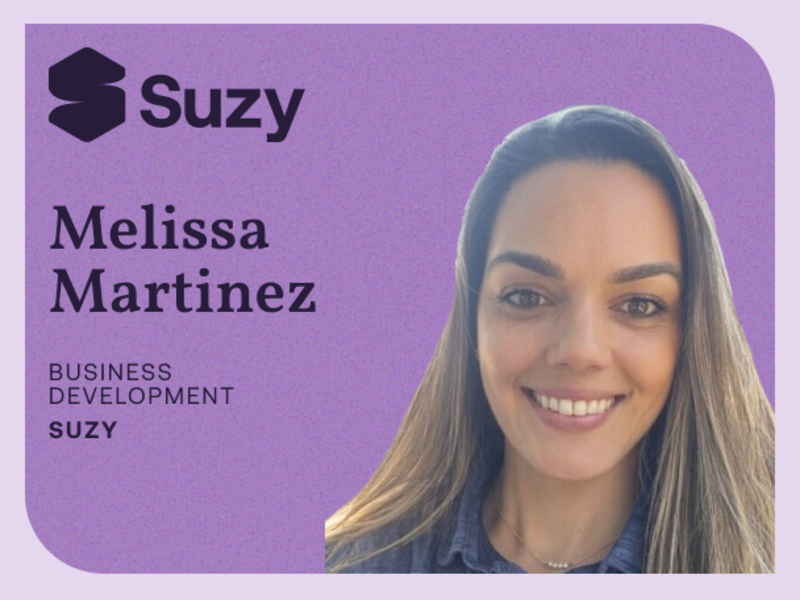

By Melissa Martinez, Account Coordinator at Suzy
There is a massive shift happening in sports media right now, and if you are relying on six-month-old planning data to build your summer marketing strategy, you are completely missing the wave.
Look back at the Women’s College World Series from last month. The numbers coming out of Oklahoma City were absolutely staggering. We aren't just talking about a slight bump in viewership. Game 2 of the championship series pulled in a record-breaking 2.5 million viewers, peaking at over 3 million during primetime, while the entire regular season leading up to the tournament was up a massive 78% in viewership year-over-year.
As a former college softball player, these numbers don't surprise me at all. I know firsthand how intense the fan loyalty is, how fast the game moves, and how deep the passion runs in this community. It is an electric environment on the field and in the stands. But for a lot of traditional corporate media buyers, those June metrics caught them completely off guard. Women's softball is no longer a niche line item or a secondary broadcast. It is a major national entertainment property, and the audience is moving faster than the corporate budgets.
The Speed of Consumer Shifts vs. The Slow Corporate Grind
Every single day in business development, I talk to brand teams who tell me the exact same thing: "We already have a research agency," or "We do our big consumer tracking studies at the end of the year." But consumer habits do not wait around for an annual corporate calendar. They change in a single weekend.
Think about how a traditional legacy research model operates. If a brand wants to test a new concept or check the temperature of a rising market, the process takes weeks. First, you have to write a rigid RFP. Then, you spend days aligning internal stakeholders across multiple departments to agree on the questions. Next, the agency takes weeks to design the sample, field the study, clean the data, and eventually compile a massive, static PowerPoint deck. By the time that deck gets dropped into a shared drive, the cultural conversation has completely evolved. The momentum is gone, and your competitors have already captured the spotlight.
This mismatch between consumer speed and corporate speed is a massive liability in modern marketing. When an audience rallies around a historic sports tournament, they want to see brands showing up in the moment. They are looking for immediate alignment. If a brand built their summer strategy based entirely on general assumptions from last year, they completely missed out on some of the highest-impact, highest-engagement ad inventory of the season. While teams were waiting for perfect data or next quarter's planning cycle, millions of highly engaged fans were locked into a historic tournament.
The risk of planning purely in the rearview mirror is that you end up chasing trends after they have already peaked. By the time a traditional, slow-moving research project confirms that an audience is growing, the opportunity to be a meaningful, authentic part of that community has already passed.
Why Brands Overthink and Miss the Moment
When a cultural moment explodes on TV, corporate marketing teams usually run into a massive bottleneck. They want to get involved, but they quickly realize they don't have a way to quickly validate their ideas before launch, so they are forced to move on gut feel.
That is a huge issue. Relying on gut feel means you are gambling with your marketing budget. When you roll the dice on guesswork, you risk completely missing the mark. You might use outdated terminology, highlight the wrong moments, or completely misread what your audience actually values about the sport. Softball fans and athletes can spot a manufactured, try-hard marketing campaign from a mile away. They know the difference between a brand that genuinely supports the sport and a brand that is just jumping on a bandwagon to secure a quick transactional win.
Think about the sheer number of commercials you see during major sporting events that feel forced, overly corporate, or slightly out of touch. That is exactly what happens when a brand relies on internal assumptions instead of actual audience data. They use the wrong lingo, focus on clichés, or completely misinterpret the culture of the sport.
Buying the ad space is the easy part. Anyone with a budget can secure a primetime commercial slot or buy up social media impressions. Knowing how to talk to the audience without relying on guesswork is where brands actually win or lose. When a business relies on slow validation pipelines, internal hesitation kicks in. Teams freeze up because the financial and reputational stakes are too high to move forward blindly, causing them to leave massive audience engagement opportunities completely on the table.
Closing the Loop: How Suzy Replaces Guesswork with Real Validation
This is exactly where Suzy bridges the gap between a fast-moving trend and a successful campaign. You don't have to rely on gut feel anymore, and you don't have to wait months for a legacy research firm to give you an answer.
Let’s look at how this plays out in the real world. Imagine an apparel or beverage brand watching a tournament break viewership records in real time. Instead of wondering if their target consumer is watching, they can log into Suzy and launch a quantitative study directly to a highly targeted panel of sports enthusiasts. Within a few hours, they receive hard, validated data showing exactly how their buyers are engaging with the sport. If they have three different creative ad scripts or marketing hooks, they can copytest them overnight to see which message strikes the most authentic chord before spending a single dollar on asset production.
This kind of rapid validation changes the entire dynamic of a marketing department. Instead of spending days arguing in a conference room about which creative direction "feels" right, the team can rely on objective, real-time consumer signals. It removes the friction from decision-making and allows brands to execute at the exact same speed as the media landscape.
But numbers on a screen only tell part of the story. To completely eliminate the fear of looking out of touch, you have to understand the community's real voice. Using real-time conversational tools like Suzy Speaks, brands can jump into live, video-based qualitative sessions with actual fans and players. They can hear the exact language, the real pre-game rituals, and the genuine energy of the sport in the consumer's own words. This direct human connection ensures your marketing copy sounds completely native and deeply respectful of the game's unique culture.
To make things even easier internally, tools like Suzy Stories turn that raw consumer feedback into clear visual summaries and scannable infographics. Instead of forcing busy executives to dig through a heavy, textbook-style PDF, the customer's true voice is delivered in a format that every department can understand and act on immediately. This speeds up internal approvals, giving teams the confidence to approve budgets and launch campaigns while the trend is still white-hot.
As a BDR, I see companies spend millions of dollars on premium ad inventory every day, only to fill that space with messaging that falls completely flat because they rolled the dice on a gut feeling. Agile consumer intelligence ensures that when a brand spends the money to step up to the plate, they actually know how to swing.
The Closing Thought
The momentum generated by the Women's College World Series proves that modern audiences do not wait around for corporate planning cycles. The passion, the loyalty, and the viewership are already there, moving full speed ahead.
The brands that win in this environment are not the ones with the most rigid, immovable annual plans. They are the ones that have the tools to replace gut feel with real validation in real time. Getting real consumer signals early enough to act on them is what keeps a brand relevant when culture takes a massive leap forward.
The history books from this summer have already been rewritten. The question for brand managers moving forward is simple: Are you going to keep gambling on your gut, or are you going to get the insights you need to play the game right now?
Want to learn more about how agile insights can transform your brand's turnaround times? Let’s talk.
Melissa Martinez is an Account Coordinator at Suzy, a consumer intelligence platform that helps marketing teams get real consumer insights fast so they can go into every launch knowing, not guessing.