


Winning the Heritage Game: How Campari Builds Modern Rituals Around Heritage Brands
A heritage brand carries an obvious advantage: people already know its story. The harder part is making sure that story still has somewhere to live in the present.
Look at Campari America and the world they’re navigating: Consumer behavior moves quickly, drinking habits have changed, new cultural spaces have emerged and technology has completely changed how brands create and communicate. But for them, staying current does not require abandoning the history behind brands like Campari and Aperol. It requires finding new ways for consumers to experience the same underlying ideas.
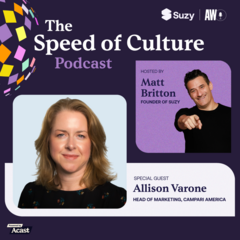
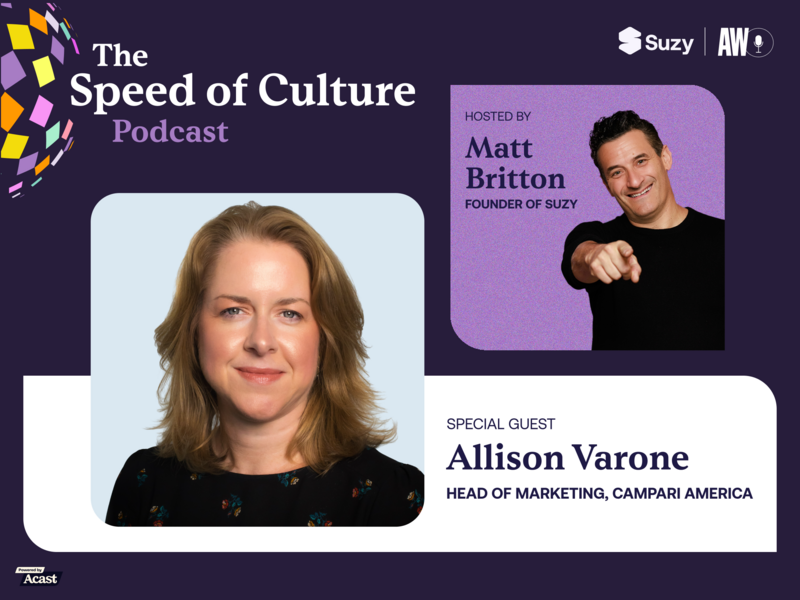
On The Speed of Culture Podcast, Matt Britton speaks with Allison Varone, Head of Marketing at Campari America, about how heritage, ritual, and human connection can move with culture without becoming detached from the brands themselves.
Social Ritual is the New Product Game
Allison’s view of lifestyle brands starts with emotional connection. A product can stay inside its category. A brand can become part of people’s lives.
That distinction matters in spirits because the drink itself is often only one part of a much larger moment. It might mark the transition from work into the evening, sit at the center of a meal, or become part of a festival, celebration, or casual afternoon with friends.
This is where the spritz has become particularly powerful. Aperol helped establish the modern spritz movement in the US, but what consumers are adopting is bigger than one recipe. The ritual is colorful, social, easy to understand and associated with a particular way of slowing down and spending time with other people. Sure, the product matters, but the experience gives it meaning.
The Alcohol Changes, The Occasion Survives
The distinction of product vs. experience becomes even clearer as consumers become more intentional about drinking. Allison points to Crodino, Campari Group’s non-alcoholic spritz option, as evidence that the social experience does not depend on alcohol itself. Crodino has existed in Italy since 1965, but its arrival in the US now meets a consumer who is increasingly comfortable moving between alcoholic and non-alcoholic choices.
Everyone still wants to participate; to taste the refreshing drink, experience the color, the light bite, the conversation and the feeling of being part of the occasion. For marketers, this is an important reminder: changing consumption does not always mean the consumer is abandoning the underlying need.
Recognize Where the Brand Belongs
That same thinking shapes how Campari America approaches experiential marketing.
Aperol appears at festivals such as Coachella and Lollapalooza because those environments already contain the feelings the brand wants to amplify: joy, sociability, freedom and connection.
But Allison does not describe cultural relevance as simply buying access to a large audience.
Before entering an experience, her team asks what consumers are actually there to get from it and whether the brand has a natural role in that moment. The same applies to talent partnerships:
- Does the person genuinely like the product?
- Do they fit the feeling of the brand?
- Would the connection make sense without a contract explaining it?
Those questions protect the brand from becoming an interruption. Focusing on questions like these is also why Campari can move between large festival activations and more local ideas such as Spritz Square or Aperol Day Club. The scale changes, but the role of the brand remains recognizable.
The Brand Experience Continues Behind the Bar
The conversation pivots to an important nuance of building “the experience” - the bar.
Cultural marketing may attract attention, but at the end of the day, the drink still has to arrive correctly. That is why Allison places so much emphasis on bartenders and the on-premise experience. Through Campari Academy, the company trains thousands of bartenders around the world on products, recipes and wider cocktail trends. It also reinforces preparation standards such as the 3-2-1 spritz recipe.
That work may sit far away from a festival activation or social campaign, but to the consumer it is part of the same experience. Every serve either reinforces or weakens the promise created everywhere else.
Heritage Should be an Anchor, Not a Cage
Campari has decades of history, recognizable visual identity, product provenance and rituals that consumers already associate with the brand. Allison sees protecting those elements as central to the marketer’s job. But she points out a crucial caveat: protecting them does not mean recreating the past.
The challenge is identifying which elements are essential and then finding contemporary places for them to live. Music culture can change, the consumer can change; even the choice of alcoholic or non-alcoholic drink can change. The emotional territory, however, does not need to. This gives heritage brands a useful filter for cultural opportunities: move the expression forward while keeping the reason behind it intact.
Use New Technology With the Same Filter
She also points out how AI creates another version of the same question. Campari America is already using the technology to improve efficiency and explore ways of working faster. Allison also sees a role for AI in planning and creative inspiration.
She is more cautious when it comes to consumer-facing content. Her point is not that brands should reject AI. It is that every brand has to decide where the technology fits without weakening what consumers value about it.
For legacy brands with distinctive products and decades of visual and cultural history, speed alone is not enough reason to change how the brand presents itself.
Staying Relevant Requires Curiosity
Allison ends the conversation with advice that connects back to everything before it: stay curious.
- Look at new technologies
- Study brands outside your category
- Pay attention to how consumer expectations are changing
- But also stay close to the business itself
Know where the product is sold, how it is sold and what the customer environment actually looks like.
That combination is critical because cultural relevance can easily become abstract. The strongest marketers connect what people are doing in culture with what happens when they walk into a bar, order a drink or choose one brand over another.
For Campari America, heritage and evolution, therefore, are not opposing strategies.
Heritage provides the ritual.
Culture keeps creating new places to experience it.