


"Now we can sell a feeling. We can sell solutions. We can sell things that are more than tech specs." – Allison Stransky
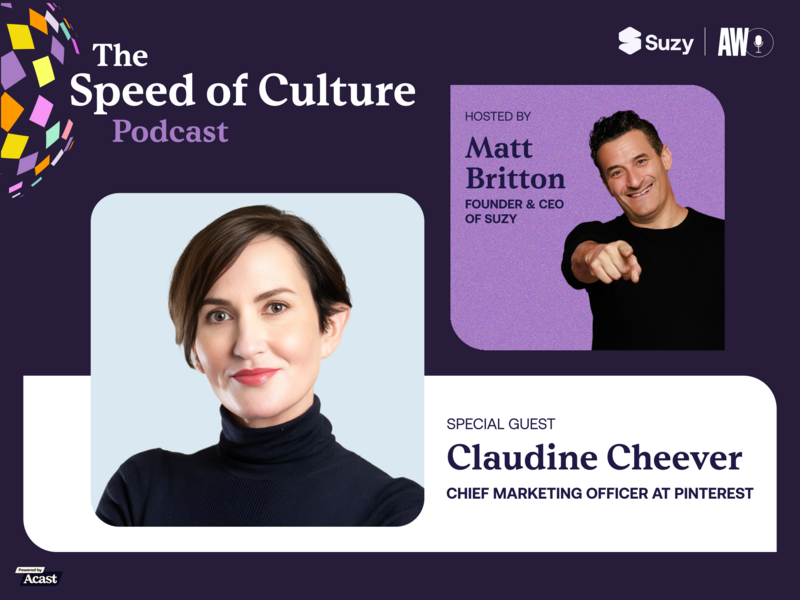
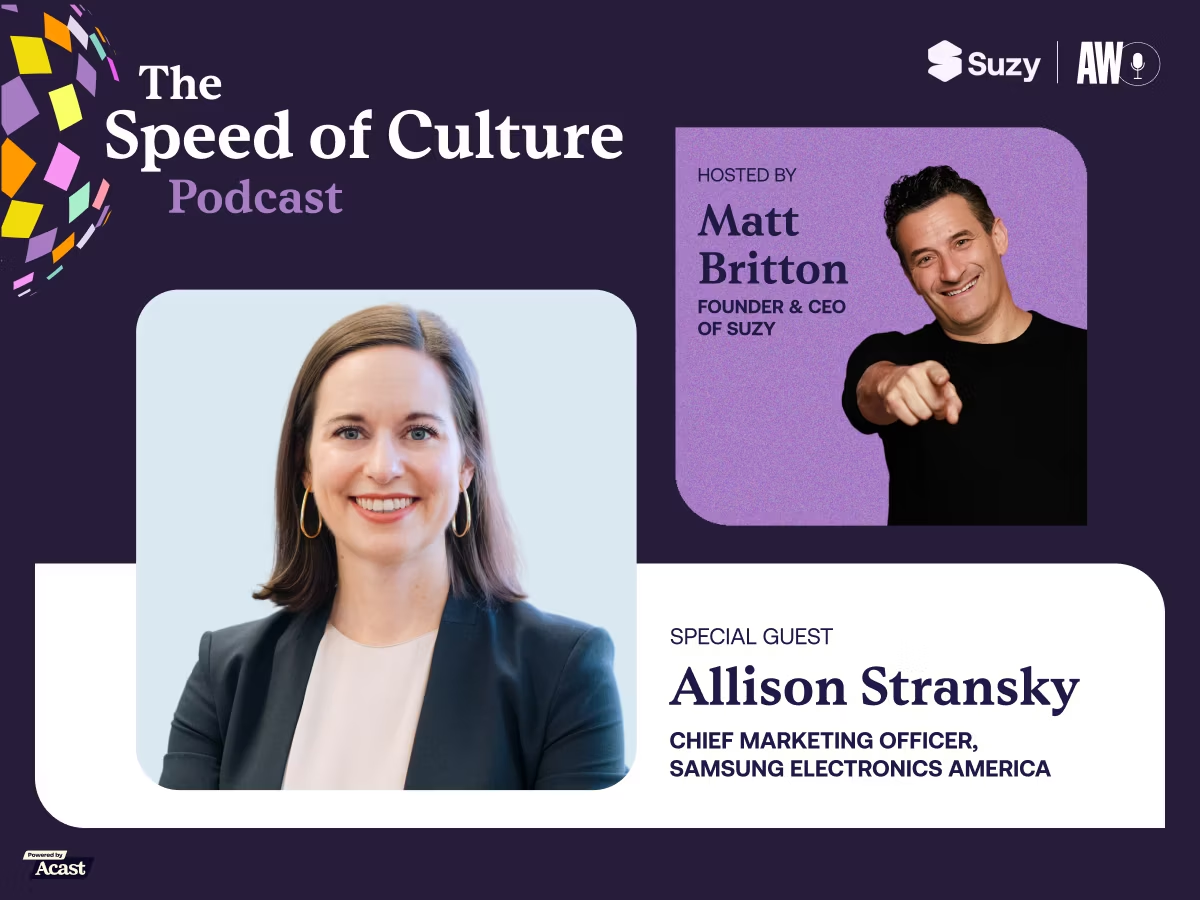
That shift sits at the center of this episode of The Speed of Culture podcast, where Matt Britton speaks with Allison Stransky, Chief Marketing Officer at Samsung Electronics America, live from CES 2026. The conversation moves from product vision to organizational transformation to what it actually means to lead a marketing function inside one of the world's largest technology companies at this particular moment in time.
Tune into the latest episode or read the transcript below to learn more. Here are some top takeaways:
The Ecosystem Is the Product
Samsung's "AI for All" vision – anchored in its ambition to be “Your Companion to AI Living” – isn't a product launch. It's a long-term strategic posture, one that repositions the brand from a maker of individual devices into a provider of connected, AI-powered living experiences. Allison explains how Samsung's unique advantage lies in the breadth of its portfolio: phones, wearables, appliances, and televisions that communicate with one another through the SmartThings platform. No other company, she argues, has that combination at scale.
What that means for marketing is significant. The story is no longer "our washing machine dries faster." It's "here is what your life could look like when everything works together." That is a harder story to tell, especially in a six-second video, but Allison describes how the "SmartThings Meets AI Home" campaign began to crack it: by leading with an insight consumers could feel, not a feature they had to understand.
From Features to Feelings
One of the clearest strategic shifts Allison describes is the move from feature-based marketing to benefit-based storytelling. For a brand like Samsung, with a portfolio that spans dozens of product categories, that shift is both a creative challenge and a structural one. It requires the marketing team to have visibility across the entire portfolio, the ability to stitch disparate product stories into a coherent narrative, and the creative discipline to make complexity feel simple and relevant.
The "SmartThings Meets AI Home" campaign was Samsung's first cross-product effort of its kind. By Allison's account, it’s some of the best-testing creative the brand had ever produced. The reason, she suggests, is that it was grounded in something real: the genuine belief that AI and connectivity make life better. That insight gave the work emotional resonance that a feature comparison never could.
Data as the Foundation
Running underneath all of it is data. Allison is direct on this point: data is now the most important asset a brand has, not because it replaces brand value, but because it is what makes brand value compoundable in the age of AI. Samsung's Big Data team sits within corporate marketing, not outside it. That structure is intentional. It means data informs media strategy, product insight, consumer engagement, and personalization from a single integrated function.
Allison also notes that much of her organizational work over the past year has been about building the infrastructure to use data well: a Media Center of Excellence, a Connected Experience Center, and the internal processes needed to activate data responsibly at scale. This kind of behind-the-scenes work rarely makes headlines, but it is, she argues, what determines whether a brand's AI ambitions actually translate into consumer experience.
The Creator Economy Grows Up
On the go-to-market side, Allison points to two areas where Samsung is leaning hard in 2026: creator affiliate programs and live commerce. Neither is entirely new, but both are evolving in ways that matter for enterprise brands. Creators are a trust mechanism, a content flywheel, and increasingly, a signal that feeds into the LLMs shaping how consumers discover and evaluate products. Allison describes a future where creator content informs AI-driven recommendations, which in turn shape purchase decisions. This is a loop that makes authentic creator relationships more strategically valuable than ever.
Live commerce, meanwhile, is still early in the US but growing fast, and Allison sees it as a natural fit for a brand whose products are best understood through demonstration. The opportunity shows consumers how a refrigerator with AI Vision works, or why a Galaxy Ring and a Samsung Health app together are more useful than either alone.
What the CMO Role Actually Looks Like Now
Perhaps the most candid part of the conversation is Allison's reflection on how her own role has changed. Three years ago, her focus was more concentrated on the day-to-day execution of marketing — campaigns, creative, positioning. Today, her role is increasingly centered on building the infrastructure that enables great work at scale: shaping team structures, strengthening data foundations, driving organizational alignment, and championing responsible innovation.. That shift, she suggests, is not unique to Samsung. It is the reality of leading marketing in a large enterprise at a moment when the tools, the channels, and the consumer expectations are all changing at the same time.
For the next generation of marketers, her advice is less about specific skills and more about orientation. Curiosity, optimism, and a genuine appetite for hard things. Those qualities, she argues, are what will carry a career through the transitions that are still coming.
What This Means for Leaders and Builders
This episode is a useful reference point for anyone navigating the technology, brand, and organizational change space. Allison's perspective: she is not selling a vision so much as describing what it actually takes to pursue one inside a complex global company.
Key takeaways include: ecosystem thinking is replacing product-level storytelling; data infrastructure is now a marketing responsibility, not just a technology one; creators and live commerce are becoming essential, not supplemental; and the most important quality in a marketer right now may simply be the willingness to keep adapting.