



How U.S. Bank Is Transforming Itself From Experimenting With AI Into Operationalizing It
AI dominates headlines. But inside most enterprises, it’s still experimental. Not much beyond pilot programs, innovation labs, and roadmaps.
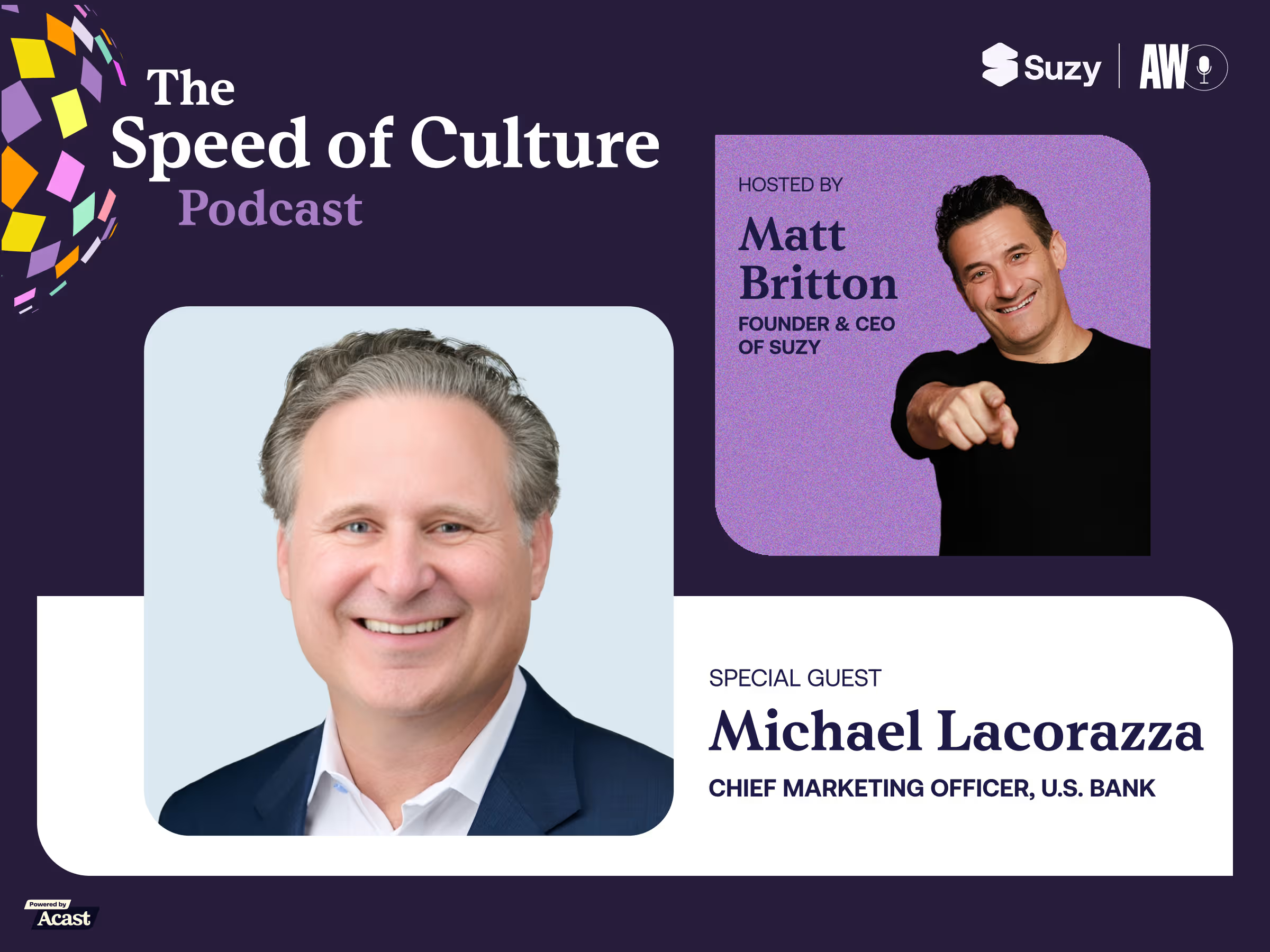
On this episode of The Speed of Culture, Michael Lacorazza, Chief Marketing Officer at U.S. Bank, shares what happens when a legacy financial institution moves beyond experimentation and begins embedding AI directly into how it operates, markets, and grows.
AI as a Speed Advantage
One of the clearest examples of operationalization came during the development of U.S. Bank’s 2024 brand campaign, The Power of Us. The team used AI-powered synthetic audiences to pressure-test creative and strategy before going to market. To ensure rigor, they ran human panels in parallel and found roughly 95% correlation in results.
The outcome? Campaign development time was cut nearly in half.
But the takeaway isn’t that AI replaces research or creative judgment. It’s that AI compresses cycles and accelerates insight. In an environment where culture and consumer behavior move quickly, speed itself becomes a competitive advantage.
Growth Over Automation
For Michael, the most exciting use case for AI isn’t just cost savings; instead, it’s growth.
While automation can reduce operational friction, the bigger unlock lies in improving customer experience in ways that compound over time. U.S. Bank feeds behavioral signals into its CRM systems so that when a customer encounters friction digitally and calls the contact center, representatives already have context. Instead of starting from zero, conversations begin pre-informed.
The ripple effect is clear: faster resolution leads to higher satisfaction. Higher satisfaction drives retention. Retention produces measurable economic upside. AI becomes less about efficiency and more about strengthening lifetime customer value.
Personalization With Permission
In financial services, personalization carries both opportunity and responsibility. U.S. Bank operates with a tremendous amount of customer data, but Michael emphasizes that transparency and permission sit at the center of its strategy.
Customers expect their bank to “know” them. They expect relevant advice, smarter product recommendations, and contextual guidance. But that expectation is built on trust.
In a world where AI tools are widely accessible, proprietary data and responsible stewardship become the real moat. The differentiator is how thoughtfully the capabilities lent by technology are applied.
Culture Still Wins
Even as algorithms dominate attention, culture remains a powerful connector. U.S. Bank has leaned into sports partnerships not just as sponsors, but as business partners to major teams. In a fragmented media landscape, live sports remain one of the last communal experiences.
For Michael, culture is an important part of staying relevant in a world where attention is increasingly individualized.
The Career Lesson That Matters Most
Amid a conversation about AI and transformation, Michael closes on something deceptively simple: learn the business.
Understanding how customers make decisions, how growth is measured, and how the P&L works builds credibility. Marketing leaders who speak the language of business, not just talk about impressions, earn influence at the executive table.
AI may accelerate marketing. But trust, business fluency, and human leadership are what sustain it.