




Beyond the Balance Sheet: How Ally Financial Is Building a Brand for the Digital Era
"Marketing is a brand act. Behave like the brand you wanna be." – Andrea Brimmer
For a long time, the banking industry relied on a predictable formula of physical branches, complex terms, and legacy reputations. The brands that could claim the most real estate on Main Street were the ones that earned consumer trust. That world is fading as a new generation of digital natives takes over the role of "CFO of the household."
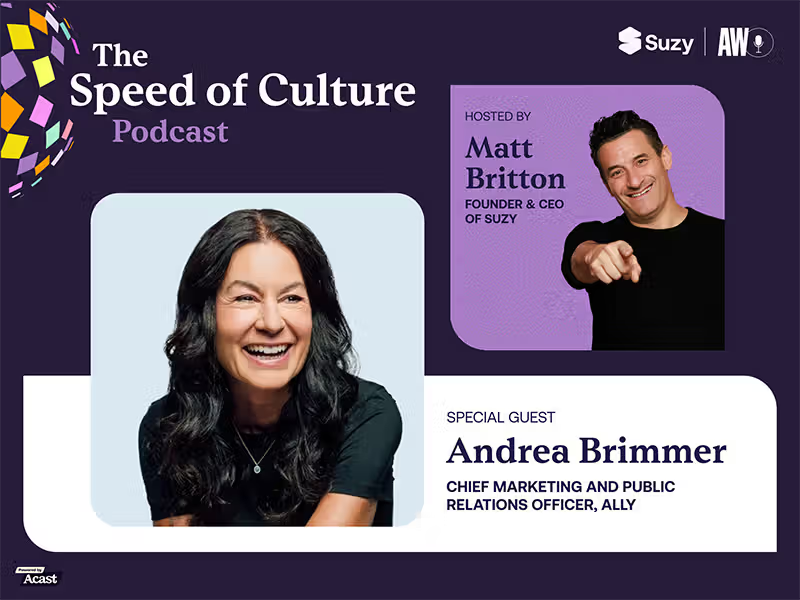
This shift is a central theme in this episode of The Speed of Culture podcast, where Matt Britton sits down with Andrea Brimmer, Chief Marketing and Public Relations Officer at Ally Financial. The discussion moves from the early days of digital disruption to the organizational culture required to maintain a lead in an increasingly competitive and automated marketplace.
Tune into the latest episode or read the highlights below to explore the evolution of Ally Financial.
The Power of Terminology
One of the most interesting strategic moves at Ally involves a simple change in language. By renaming traditional "checking" accounts to "spend" accounts, the brand acknowledges a fundamental truth about how younger consumers interact with money.
Andrea explains that the word "checking" feels archaic and suggests oversight, while "spend" reflects the reality that people work hard for their money and want the freedom to use it for experiences and daily life. This decision is an example of marketing that lives within the product itself.
Correcting the Media Imbalance
A significant portion of the conversation focuses on Ally’s 50/50 Pledge, a commitment to reach media spending parity between men's and women’s sports. This initiative began with the realization that despite the success of women athletes, they received less than five percent of media coverage. By pledging to match every dollar spent on men’s sports with a dollar for women's sports, Ally moved beyond a statement of intent and into a five year plan that required active negotiation and the creation of new media opportunities. Achieving this goal ahead of schedule serves as a reminder of what happens when a brand uses its platform to drive systemic change.
Financial Therapy and the Psychology of Money
Banking is often treated as a series of cold calculations, but the reality is that money is one of the most emotional aspects of human life. It is a leading cause of anxiety and a primary reason for the breakdown of relationships.
Andrea shares how Ally is addressing this by sending team members to become certified in financial therapy. Through the "Money Roots" curriculum, the bank helps consumers examine their childhood relationships with money and the "chains that bind" them to certain behaviors. This empathetic approach positions the brand as a helpful partner rather than a distant institution.
Brand Authority in an AI World
As search behavior shifts from scrolling through links to asking a single question from an AI chatbot, the importance of brand authority has never been higher. Andrea notes that in an environment where a purchase funnel can collapse into one prompt, earned media and PR are critical.
Large language models rely on objective, trusted sources to validate their rankings. This means that consistent brand acts and a strong reputation for customer service are the most effective ways to ensure a brand remains visible when a consumer asks for the "best online bank."
The Modern Marketer’s Role
Perhaps the most important takeaway for future leaders is Andrea’s perspective on the role of the CMO. It is a position that requires staying close to where the work is done and avoiding the temptation to "drink your own Kool Aid." Success in marketing today means being a human first, answering the emails, and using the brand’s platform to leave the world better than you found it.