





“Premium means access to the things that you love.” – Jessica Ling
As consumer expectations continue to evolve, premium brands face a defining challenge: how to modernize without weakening trust. Status alone no longer carries meaning. What matters now is access - access to culture, experiences, and moments that feel personal and relevant. For brands operating at global scale, this shift reshapes how value is created, how loyalty is earned, and how relevance is sustained over time.
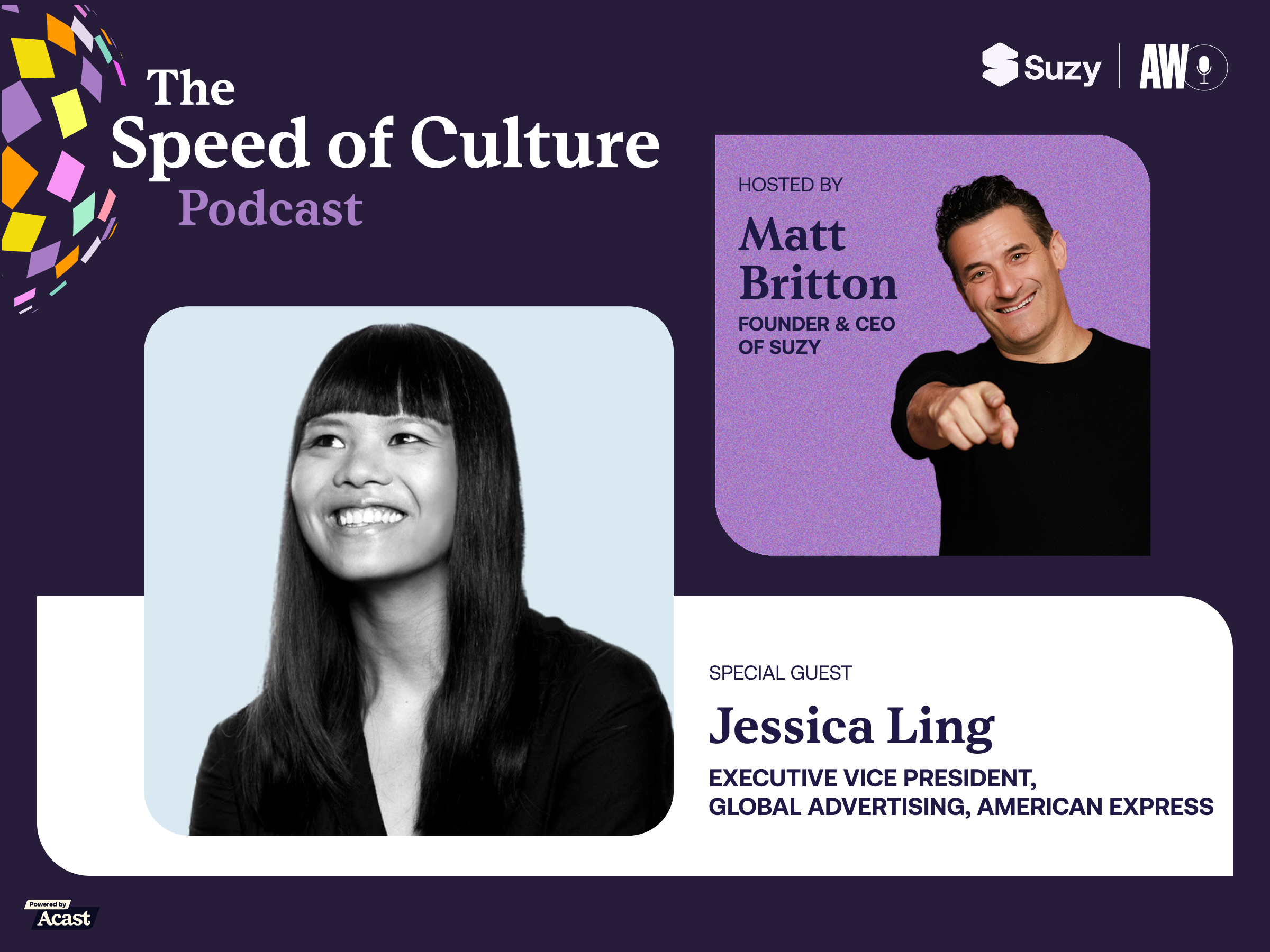
In this episode of The Speed of Culture podcast, Jessica Ling, Executive Vice President of Global Advertising at American Express, joins Matt Britton to explore how a 175-year-old brand continues to lead by balancing heritage with cultural relevance. Jessica unpacks the American Express advertising strategy, the discipline behind the Amex Platinum campaign, and how the future of premium experiences is being built through access, consistency, and trust. The conversation spans culture, storytelling, creators, live sports marketing strategy, and the growing implications of AI and the future of commerce for modern brand leadership.
Tune into the latest episode or read the transcript below to learn more. Here are some top takeaways:
Premium Has Shifted From Status to Access
Jessica begins by reframing what premium means today. For Gen Z and Millennial membership, premium is not about exclusivity or hierarchy. It is about proximity to the experiences they care about most.
That could mean front-row access to live music. A meaningful travel experience that feels elevated without feeling distant. A dining moment that becomes part of a story shared long after the night ends. Premium lives in closeness, not distance.
This shift defines the future of premium experiences at American Express. The brand does not target a single demographic archetype. Instead, it focuses on what access unlocks emotionally across different life stages. When premium is defined by experience rather than status, loyalty becomes more durable and more human.
Culture Is the Anchor, Not the Accent
Rather than trying to be everywhere, American Express concentrates on a few cultural arenas where access genuinely matters: entertainment, travel, dining, and sports.
Jessica explains that this focus allows the brand to invest deeply rather than broadly. Through platforms like Resy, Amex Travel, and long-standing sports partnerships, the brand positions itself inside the moments people already value. Partnerships such as creator marketing and Olivia Rodrigo reinforce this approach, blending fandom, culture, and membership into a shared experience rather than a sponsorship placement.
This is a customer experience strategy rooted in cultural participation, not interruption. The brand earns relevance by showing up where passion already exists.
Heritage Is a Responsibility, Not a Constraint
American Express carries 175 years of history built on trust, service, and security. Jessica is clear that this foundation is not optional. It is the baseline.
At the same time, heritage alone does not guarantee relevance. The work requires holding both truths at once: protect what people rely on while modernizing how value shows up in their lives. This balance sits at the center of the American Express advertising strategy.
By treating trust as a long-term asset, the brand creates space for innovation without destabilizing confidence. That discipline fuels loyalty and innovation rather than forcing tradeoffs between safety and progress.
Storytelling Requires Discipline at Scale
Jessica describes how global consistency depends on strong creative platforms rather than one-off ideas. The Amex Platinum campaign, built around the idea that “There’s Nothing Like Platinum,” sets a clear standard.
Every benefit, execution, and partnership must meet that promise. The discipline behind this approach ensures cohesion across television, social, creator partnerships, and live sports marketing strategy. Real locations, real experiences, and real access replace abstraction.
This is how brand storytelling at scale remains recognizable and emotionally coherent across markets without losing flexibility.
Media Works Best as a Layered System
American Express does not treat channels as competitors. Jessica explains how live sports remain a powerful cultural stage, delivering shared moments through platforms like the NBA, NFL, MLB, and the US Open. Social channels extend those moments into ongoing conversation and personal engagement.
Television provides scale and cultural gravity. Social provides intimacy and continuity. Together, they form a layered architecture designed to build momentum rather than fragmentation. This integrated approach strengthens the live sports marketing strategy while keeping storytelling grounded in audience behavior.
Creators Expand Belonging, Not Just Reach
Creators play a meaningful role in how American Express reaches new audiences. Jessica describes them as trusted voices who bring lived experience into the brand narrative.
Through partnerships like creator marketing and Olivia Rodrigo, American Express enters fan communities with credibility rather than spectacle. Membership becomes visible through real participation rather than promotion. When creators reflect themselves inside the brand, connection forms naturally.
This is cultural alignment, not amplification. And it reinforces why access feels earned rather than marketed.
AI Changes the Front Door of Commerce
As conversational platforms reshape how people discover and decide, Jessica acknowledges that brands must rethink visibility, content structure, and commerce pathways. Search behavior is compressing. Decision cycles are shortening.
The implications of AI and the future of commerce extend beyond marketing into payments, discovery, and trust. American Express is approaching this shift thoughtfully, focusing on how the brand shows up when decisions happen quickly and guidance replaces browsing.
Learning, experimentation, and restraint guide this phase. Progress begins with understanding rather than certainty.
Personalization Becomes the New Loyalty Engine
With deep insight across travel, dining, spending, and lifestyle, American Express holds a powerful view into customer behavior. Jessica explains that the opportunity lies in using this intelligence to design personalization and connected experiences that feel intentional rather than invasive.
When recommendations align with real habits and preferences, loyalty forms naturally. Experience becomes coherent across touchpoints. The brand moves from transactional interaction to long-term relationships.
This is where data earns its place, not as leverage, but as support.
Leadership Built Through Experience, Not Theory
Jessica also reflects on leadership shaped by time spent inside organizations, navigating complexity rather than managing optics. Stepping into unfamiliar roles. Fixing what needs fixing. Prioritizing accountability over comfort.
In environments where certainty arrives late, leadership depends on clarity, ownership, and trust. Those principles mirror how American Express approaches brand stewardship at scale.
What This Means for Brand Leaders
This episode offers more than insight into one global brand. It offers a grounded framework for modern brand building:
- Premium is defined by access, not status
- Culture creates relevance when participation replaces promotion
- Trust is the foundation that enables innovation
- Discipline sustains brand storytelling at scale
- Personalization deepens loyalty when rooted in real behavior
- Leadership requires steadiness, not spectacle
For leaders navigating customer experiences, loyalty and innovation, or the evolving implications of AI and the future of commerce, this conversation provides clarity without hype.